Many of us live surrounded by belongings we no longer need or use. This accumulation is far more than a simple organisational issue. It affects our mental health and overall sense of well-being.
When our living spaces become filled with excess items, it can create a constant, low-level stress. This disorganised environment makes it harder to focus and relax in our own homes.

People often hold onto possessions for complex reasons. An item might represent a cherished memory, a future possibility, or a fear of waste. Letting go can feel like a loss, which is why discarding things is so challenging for many.
Understanding these psychological roots is the first step toward positive change. Recognising why we accumulate is key to developing healthier habits with our stuff.
Key Takeaways
- Excess belongings impact more than just physical space; they affect mental well-being.
- A cluttered environment contributes to daily stress and reduces the ability to focus.
- Emotional attachments and a fear of waste are common reasons people keep items.
- Many individuals today face similar challenges with overflowing cupboards and drawers.
- Acknowledging the problem is the essential first step towards creating a calmer, more organised home.
- Changing your relationship with possessions can lead to improved daily functioning.
Understanding the Psychology of Clutter
Our living spaces often become a visual diary of postponed decisions and accumulated belongings. This state, commonly known as clutter, exists where we hesitate between what we need and what we keep.
Defining Clutter and Its Roots
Clutter is not just physical mess. It represents a state of mind filled with indecision and overwhelm. It develops when people accumulate items they do not use.
Ask yourself: Do you own anything you never use? Do you buy new items to replace lost ones? Are you nervous about having guests over? These questions can help identify clutter in your home.
| Aspect | Physical Clutter | Mental Clutter |
|---|---|---|
| Definition | Disorganised belongings in your physical space. | A feeling of overwhelm and indecision in your mind. |
| Common Examples | Piles of unused clothes, full junk drawers, old electronics. | Difficulty focusing, constant low-level stress, procrastination. |
| Primary Impact | Creates a chaotic environment. | Affects mental clarity and emotional state. |
How Our Mind Processes Excess Possessions
Our brains have a limited capacity for visual stimuli. A cluttered environment bombards our senses with too much information. This makes concentration difficult.
Research in environmental psychology shows a direct link. The state of our physical space affects our mental health. It influences decision-making and emotional well-being.
Not everyone reacts the same way. A person with perfectionist tendencies may feel more stress from disarray. Understanding this connection is the first step toward change.
Exploring Emotional Attachments to Possessions
A deep connection to our possessions frequently stems from the memories and emotions they symbolise, not their material worth. This bond makes discarding items a deeply personal challenge for many.
Sentimental Value and Personal Memories
Objects become keepsakes because they represent important parts of our lives. A childhood toy, a gift from a loved one, or a souvenir from a special trip holds powerful sentimental value.
These possessions act as tangible links to our personal history. They help us feel connected to people and past experiences. This attachment satisfies a fundamental human need for belonging and continuity.
The Fear of Letting Go
For many people, the thought of discarding sentimental items triggers anxiety and stress. Common fears include:
- Feeling guilty about being wasteful.
- Worrying you might need the item later.
- Fearing the loss of the associated memories.
This fear can lead to accumulating clutter, as things pile up. It’s crucial to remember that your memories live within you, not within the objects. Letting go of possessions does not mean losing the experiences they represent.
Impact of Clutter on Mental and Physical Health
Living amidst constant disarray isn’t just untidy; it actively undermines our mental and physical health. Scientific studies confirm that our surroundings have a profound impact on our well-being.
Stress, Anxiety and Sleep Disruption
Cluttered environments keep the body in a state of high alert. Research shows they elevate cortisol, the primary stress hormone, throughout the day.
This heightened state triggers anxiety and tension. A messy bedroom, for instance, signals to the brain that work remains unfinished.
This makes relaxation and quality sleep much harder to achieve. The cycle of poor sleep then increases stress, further reducing one’s ability to manage the mess.
Effects on Daily Functioning
Daily life becomes more difficult in a disordered space. Routine tasks take longer, and procrastination on important duties is common.
People waste time searching for misplaced items. This constant struggle can contribute to feelings of hopelessness and reduced life satisfaction.
Clutter is linked with conditions like depression and anxiety disorder. It represents a genuine threat to overall health.
| Area of Health | Common Impacts of Clutter | Potential Long-term Effects |
|---|---|---|
| Mental Health | Increased stress, anxiety, difficulty concentrating | Chronic anxiety, depression, reduced cognitive function |
| Physical Health | Elevated cortisol, sleep disruption, fatigue | Weakened immune system, cardiovascular issues, weight gain |
| Daily Functioning | Procrastination, wasted time, reduced productivity | Strained relationships, decreased job performance, lower life satisfaction |
Clutter in the Home: Practical and Emotional Challenges
The home, intended as a personal sanctuary, can quickly transform into a source of daily frustration when clutter takes over.
This household chaos is linked to increased stress and negative emotions. It undermines the calm a living environment should provide.
Practically, piles of belongings restrict movement through rooms. They make it hard to find necessary items and waste precious time.
Kitchen counters vanish under mail. Bedrooms become storage for unworn clothes. This limits how you use your space.
Emotionally, many people feel shame about their home’s state. This often prevents inviting guests over, leading to social isolation.
Family dynamics suffer in this stressful environment. The constant visual noise affects everyone’s mood and quality of life.
| Challenge Type | Common Examples | Primary Consequence |
|---|---|---|
| Practical | Blocked pathways, lost items, inaccessible storage | Reduced functionality and wasted time |
| Emotional | Embarrassment, anxiety, feeling overwhelmed | Social withdrawal and strained relationships |
| Overall Impact | Household chaos and restricted living | Diminished well-being and life enjoyment |
Addressing this clutter is about more than tidiness. It is reclaiming your home as a place that supports your well-being.
Consumer Culture and the Minimalism Movement
A significant driver behind the clutter in our homes is the relentless engine of consumer culture. This culture equates happiness with acquiring the latest gadgets and fashion. It pushes people to buy stuff they don’t need for a fleeting sense of joy.
Influence of Advertising and Social Media
Our world today is saturated with messages to buy more. Advertisements and social media constantly suggest we need new things to keep up.
This creates unrealistic comparisons. It fuels a sense that we require certain possessions to present ourselves properly to the world.
Embracing Minimalism for Well-being
The minimalism movement offers a different way. It is about intentional choice, not deprivation. It focuses on keeping only what is valuable and meaningful.
Research supports its benefits for well-being. Living with less can reduce stress and increase life satisfaction. Understanding these cultural reasons helps people make more conscious choices about what enters their homes.
Strategies for Effective Decluttering
Effective decluttering is less about a single massive effort and more about consistent, small steps. This approach reduces the stress and overwhelm that stops many people from starting.
Starting Small with the 5-Minute Decluttering Exercise
Commit just five minutes of focused attention to one tiny area, like a single drawer. Set a timer and sort items into four boxes:
- Keep
- Donate
- Discard
- Maybe
This clear framework makes quick decisions easier. Celebrate your progress when the timer stops. Small wins build momentum over time.
Developing Organisational Systems
Good organisation prevents future mess. Store things you use daily where they are easy to reach.
Aim to keep surfaces like desks and counters clear. This simple step creates an instant sense of calm. Remember, it’s a gradual process. Be patient with yourself as you find the best ways to manage your space.
Gradual Decluttering: Step-by-Step Approaches
A systematic way to tackle household clutter transforms an overwhelming task into manageable steps. Begin by setting realistic timeframes for each room. Allocate two weeks for a living room and three for a garage, for example.
This room-by-room process prevents burnout. As you work, sort items into four distinct piles.
- Keep: For essentials you use regularly.
- Donate: For usable things others might need.
- Discard: For broken or expired items.
- Decide later: For objects requiring more thought.
Start with easy decisions like old cosmetics or expired food. Ask yourself if you’ve used an item in the past year. If not, it’s likely safe to donate.
Invite a trusted friend to help. They offer motivation and an objective perspective on sentimental pieces.
If letting go feels too difficult, consider a self-storage unit as a first step. It creates immediate space in your home while you decide.
Mindful Decluttering: Incorporating Meditation and Gratitude
By bringing mindful attention to the process of sorting your belongings, you transform a mundane task into a journey of emotional discovery. This approach shifts the focus from sheer volume to conscious choice, benefiting your mental health.
Mindfulness Techniques for Reducing Clutter
Begin with a few minutes of focused breathing. This centres your mind and reduces initial stress or anxiety.
As you handle each item, pay full attention to your feelings. Notice any resistance without criticism. Engage your senses—feel the texture, note the colour.
This sensory awareness creates a pause. It helps you distinguish real value from mere attachment.
Practising gratitude is powerful. Thank an object for its service before letting it go. This sense of appreciation eases guilt and honours the memory it holds.
Notice the physical and emotional emotions that arise as space clears. This feedback is valuable for your ongoing wellbeing.
Creating Functional Spaces with Less Clutter
The goal is not empty space, but a home where every area serves a clear, supportive purpose in your life. This final stage of organising transforms cleared areas into functional, calming environments.
Thoughtful design ensures your layout supports daily activities rather than hindering them. It is about creating a natural flow and a sense of ease in your surroundings.

Optimising Home Layout for Calm Environments
Principles like feng shui highlight how arrangement affects energy and mood. Research links such mindful layouts, especially in bedrooms, to improved sleep quality.
Start by defining the primary function for each room. Arrange your furniture to support this purpose and allow for easy movement. Keep pathways clear and surfaces accessible.
This intentional approach reduces visual noise and mental load. It allows the beauty of your furniture and architecture to be appreciated, turning chaos into aesthetic pleasure.
Key principles for creating functional spaces include:
- Designate zones: Give each space a specific role to prevent default clutter accumulation.
- Prioritise flow: Arrange belongings and furniture to create open, accessible pathways.
- Celebrate clarity: Notice the calmness and control a well-ordered environment brings to your daily life.
Notice how it feels to use a room designed for its purpose. This positive reinforcement is powerful motivation to maintain your new, organised way of living.
Managing the Psychology of Clutter in Your Workspace
Professional performance often suffers when our immediate work environment is in disarray. A chaotic desk or office creates constant visual noise that competes for your mental resources.
Improving Concentration and Reducing Distractions
Disorganised papers and supplies constantly demand your attention. This visual chaos impairs your brain’s ability to filter information and maintain focus.
Research shows cluttered workspaces reduce cognitive performance. You waste time searching for documents, which breaks your flow on important tasks.
This constant distraction has a direct impact on your ability to work effectively. A clear surface allows your mind to concentrate on one thing at a time.
Enhancing Productivity Through Organised Spaces
Taking control of your environment is key. Implement simple systems like daily paper sorting and dedicated digital folders.
Maintain a clear desk policy to minimise visual stimuli. This reduces stress by eliminating the feeling that work is buried somewhere.
For people working from home, create intentional boundaries. Keep your professional space separate from household clutter to maintain focus and boost job satisfaction.
Addressing Clutter and Relationship Strain
When clutter infiltrates a shared home, it rarely remains just a personal issue. It becomes a source of tension between the people living there.
Common strains include arguments over whose belongings dominate a room. Disagreements about what to keep or discard can fuel resentment.
One person’s accumulation often causes stress and anxiety for others. Shared spaces become unusable, disrupting daily life.
Embarrassment about the mess can lead to social isolation. People stop inviting friends over, cutting off vital connections.
This loneliness takes a serious toll on both mental and physical health. It creates a damaging cycle where stress from the mess causes more arguments.
Addressing this requires a collaborative approach. View it as a shared challenge, not a personal failing.
Open communication is key. Negotiate different standards and needs respectfully.
Prioritise the well-being of all ones sharing the space. Balance individual attachments with the collective need for a calm environment.
Working together can repair strained relationships and restore harmony.
Understanding Hoarding and Its Distinct Characteristics
Recognising the line between everyday clutter and hoarding disorder is crucial for seeking appropriate help. Hoarding is a recognised psychiatric condition. It involves a persistent inability to discard possessions, regardless of their value.
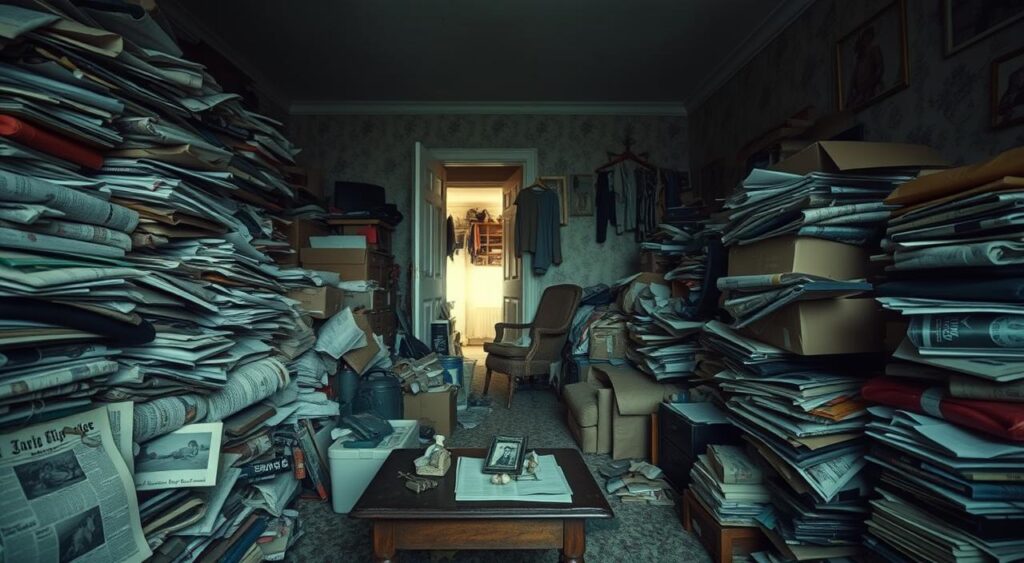
This leads to homes filled with excessive piles of items. The living space becomes cramped and dysfunctional. It is more than just being untidy.
Identifying Signs of Hoarding Disorder
Key signs include rooms made unusable by things. A person may not see a problem with the severe clutter. They feel intense distress at the idea of discarding possessions.
This differs from organised collecting. Collecting is systematic and brings joy. Hoarding causes disorganisation, distress, and major life disruption.
When Clutter Becomes a Hazard
Excessive accumulation creates serious safety risks. Blocked exits are a fire hazard. The weight of items can cause structural damage.
Accumulated rubbish leads to unsanitary conditions. This poses a direct threat to physical health. Falls become more likely, especially for older people.
Research links this disorder to other conditions. One study found a high rate among people with ADHD. Professional help is essential for regaining control.
When to Seek Professional Help for Clutter Removal
For some individuals, the challenge of discarding items is deeply intertwined with emotional or mental health factors. Self-help strategies may not be enough.
Consider seeking professional help if your clutter causes overwhelming anxiety. Other signs include it blocking daily activities or creating safety hazards at home.
Persistent stress or feelings of depression linked to your possessions are strong indicators. This disorder in your living space can signal an underlying condition needing treatment.
Therapeutic Approaches to Clutter-related Stress
Cognitive behavioural therapy (CBT) is a leading evidence-based treatment. It helps identify and change unhelpful thought patterns about belongings.
A therapist can teach healthy coping ways for the anxiety and guilt that arise. This professional help addresses the root causes, not just the physical mess.
Other approaches include exposure therapy and motivational interviewing. Research and study show these methods are effective for hoarding behaviours.
Professional organisers who specialise in these challenges can also provide practical support. Seeking this assistance is a sign of strength and self-care, crucial for long-term health.
It can make a profound difference to your overall mental health and quality of life.
Long-term Strategies: Sustaining a Clutter-Free Life
Keeping your living space organised is a continuous practice, not a one-time project you can tick off a list. The real work lies in maintaining the clear state you’ve created. Consistency in small actions matters far more than perfect, intensive efforts.
This ongoing process requires building new, sustainable habits. It is about changing your daily way of interacting with your home and things.
Building New, Sustainable Habits
Start by dedicating ten minutes each day to returning items to their proper places. Process mail and paper immediately to stop piles from forming.
Adopt a “one in, one out” rule for new purchases. Before buying, honestly ask if you will use it. Wait 48 hours for non-essential things. This prevents new clutter from entering your life.
Regular Maintenance and Review Tips
Schedule brief weekly reviews of different areas in your home. A monthly check of a specific room catches disorder early. Seasonal wardrobe reviews are excellent for this.
Apply the same control to your digital space. Unsubscribe from promotional emails. Regularly delete old files and organise documents into folders.
A simple maintenance schedule makes this time investment manageable. It helps many people stay on track.
| Frequency | Focus Area | Key Action | Primary Benefit |
|---|---|---|---|
| Daily | Surfaces & Floors | 10-minute reset; process incoming paper | Prevents daily accumulation |
| Weekly | One specific zone (e.g., kitchen counter) | Quick sort and purge | Catches clutter before it grows |
| Monthly | One full room or category | Reassess items for current use | Maintains system integrity |
| Seasonally | Wardrobe, pantry, storage | Donate unused items; discard expired goods | Aligns possessions with the season and your life |
This regular maintenance is an investment. It pays off with reduced stress and a greater sense of control over your environment and time.
Conclusion
A calm and functional living space stands as a powerful foundation for mental and emotional health. The accumulation of excess stuff is far more than a tidiness issue. It reflects deep emotional ties and societal pressures that impact our well-being.
This disarray contributes to daily stress and can strain relationships. Addressing it through mindful decluttering fosters a profound sense of control. It clears not just physical space, but also mental clutter.
This process is a personal journey, not a one-time task. Setbacks are normal. Approach your possessions with self-compassion, recognising the needs they once served.
By taking action, you create a home that supports your true values. This leads to a lighter, more focused life today. Your ongoing well-being is worth the effort.