Have you ever wondered what happens to your recycling after it’s collected? Modern waste management relies on sophisticated centres known as materials recovery facility UK operations. These plants are the backbone of our efforts to handle the growing stream of discarded items from homes and businesses.
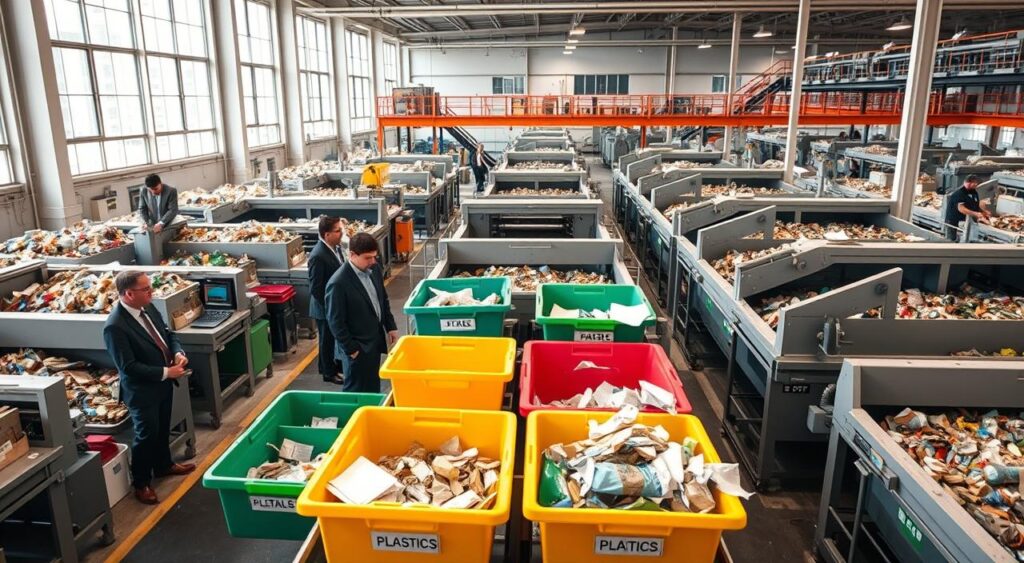
At these sites, mixed loads are transformed. Through a series of automated and manual steps, every piece is sorted with precision. This rigorous process ensures the final output meets high-quality standards for manufacturers. The goal is clear: turn what was once rubbish into valuable commodities.
Centralising this work offers major environmental benefits. It cuts down on transport emissions by processing waste in one location. Ultimately, effective recycling diverts tonnes of material from landfill each year. This is a crucial step towards a more circular economy.
Key Takeaways
- These specialised plants are essential for managing the UK’s household and commercial waste.
- They process mixed collections, sorting different materials with high accuracy.
- The primary objective is to divert as much waste as possible from ending up in landfill.
- Centralised sorting significantly reduces the environmental impact of transport.
- The process transforms discarded items into clean, valuable resources for industry.
- Quality control is paramount to ensure materials meet strict standards for reuse.
- They play a fundamental role in supporting the country’s recycling and circular economy goals.
How a materials recovery facility UK Operates
Operation starts with the careful inspection of incoming lorry loads to safeguard the entire system. These sophisticated plants run a two-phase operation to ensure maximum efficiency and purity in the final output.
Inbound Waste and Pre-Sort Inspection
A dedicated team at the plant inspects all inbound waste loads every week. They look for heavily contaminated items that must be rejected. This crucial step prevents problems later in the process.
Staff also monitor the fast-moving conveyor belts. They manually remove general rubbish or incorrect items. This human oversight protects the quality of the entire recycling operation.
Mechanical Separation and Optical Sorting Processes
Advanced mechanical separation equipment then takes over. It expertly extracts paper, card, and glass from the mixed streams. This is the first major sorting stage.
For metals, the system uses aluminium eddy currents and over-band magnets. These tools isolate specific metal material from the remaining plastic. Finally, automated optical sorters identify different plastic types.
This technology ensures each recycling category is correctly sorted. The sorted waste is now clean and ready for the next stage.
The Waste Recycling Journey and Processing Techniques
Upon arrival, each delivery undergoes a critical weighing and registration process. This marks the start of a sophisticated journey to transform mixed recyclable materials into clean, valuable commodities.
Weighbridge Procedures and Feed Hopper Functionality
Every vehicle must cross the weighbridge. A busy site can manage over 1,500 movements each week. This data is vital for tracking the tonnes of packaging received.
Large feed hoppers then control the flow. They regulate the density of items on the conveyor belt. This ensures the plant operates at a steady capacity without overloading the equipment.
Advanced Equipment and Technology in Use
The business processes a wide variety of items. These include aluminium cans, steel cans, plastic bottles, and paper. Each is sorted into pure streams.
Modern separation technology recovers more material. It captures valuable resources like wood and glass. This drastically cuts the amount of general waste.
This efficient service aids local authorities. It allows for co-mingled collection, which lowers operational costs significantly.
| Packaging Material | Separation Technology | Output Stream |
|---|---|---|
| Aluminium Cans | Eddy Current Separator | Non-Ferrous Metal |
| Steel Cans | Over-band Magnet | Ferrous Metal |
| Plastic Bottles | Optical Sorter | PET / HDPE Plastics |
| Paper & Card | Screening & Air Classification | Fiber for Industry |
Maintaining Quality and Minimising Contamination
Producing high-grade resources from our discards is not just about technology; it’s a constant battle against contamination. Items like nappies and food waste threaten the purity of entire recycling streams. Constant vigilance from the sorting team is essential to protect the final product’s value.
Identifying and Removing Unwanted Materials
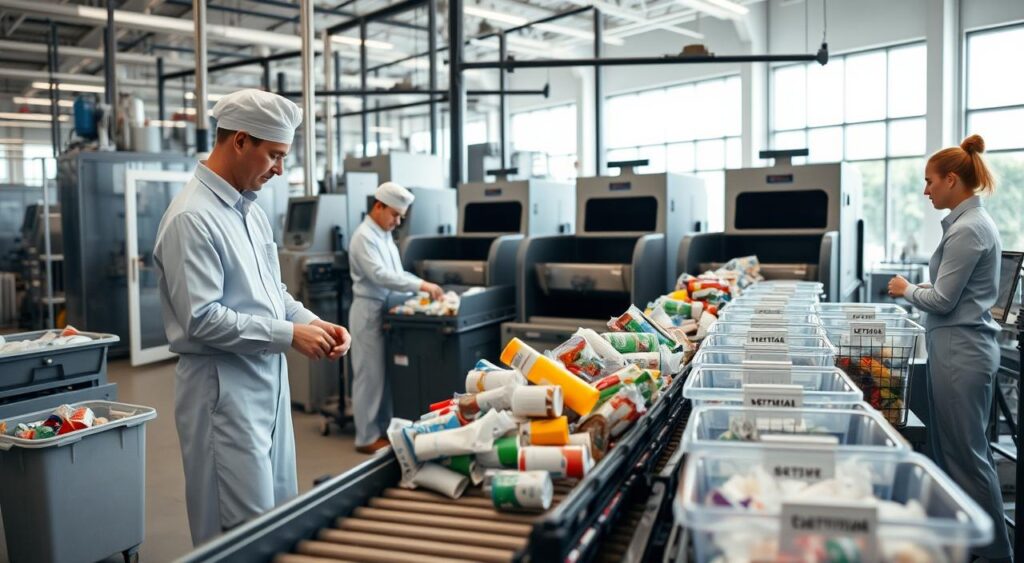
The plant must handle a wide variety of incorrect items mixed in with recyclable materials. Staff manually remove this general waste from fast-moving belts. Advanced equipment also works to extract contaminants automatically.
This diligent process ensures the final amount of clean plastic, paper, and metal is maximised. It directly reduces the costs associated with processing and disposal.
Quality Standards, Legislation and Market Demands
Buyers in the industry have strict specifications for the material they purchase. For example, a major recovery facility in Edmonton received a £5.5m investment to meet these rigorous standards. The goal is to transform waste into a high-quality commodity.
Public education by local authorities and businesses is crucial. Teaching correct collection habits at home reduces contamination at the source. This makes the entire system more efficient and sustainable.
Regional Impact: Facilities and Capacity Across the UK
A network of large-scale processing centres forms the backbone of the UK’s recycling infrastructure. These sites vary in size and specialisation but share a common goal. They efficiently handle the vast amount of discards from homes and businesses.
Case Study: The Edmonton ‘Super’ MRF
The Edmonton plant is a prime example of modern capacity. It spans over 35,000 square metres and employs more than 340 staff. Operating 24/7 across four shifts, it processes an impressive 5,200 tonnes of waste each week.
This service is crucial for around two million residents. The plant ensures their collected recycling is managed sustainably. It transforms municipal waste into valuable resources for the industry.
Overview of Other UK Recycling Facilities
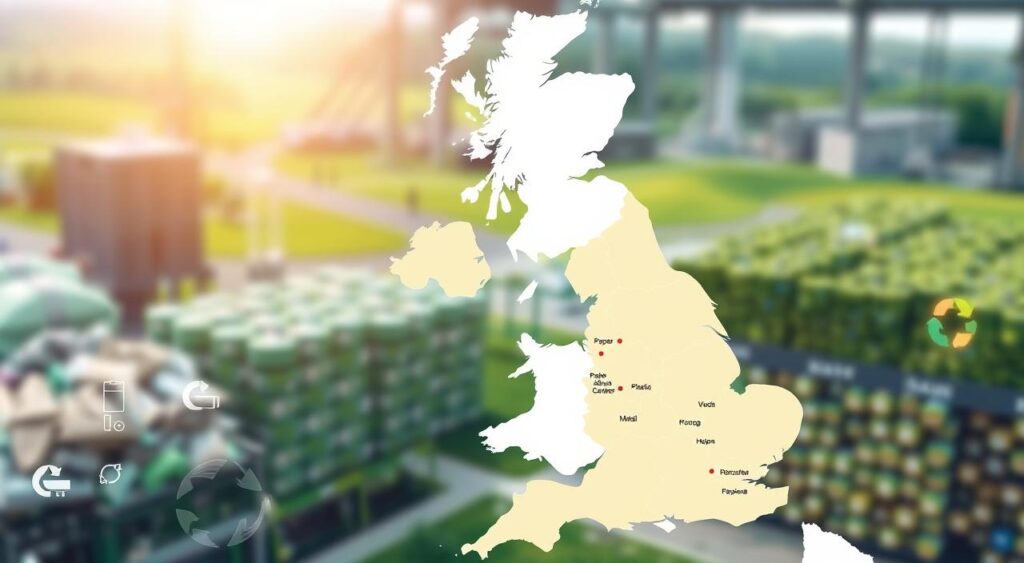
Other major centres contribute significantly to national recycling efforts. The Alton MRF, for instance, has a total capacity of 85,000 tonnes per year for recovered materials.
New developments continue to enhance this network. A state-of-the-art resource recovery site is being built in Carmarthenshire. It is scheduled to open in Spring 2026.
Together, these facilities provide a vital waste recycling service. They support local authorities by turning discards into high-quality raw materials or energy.
Conclusion
Transforming household and commercial waste into valuable commodities is a complex but essential modern process. Modern recycling facilities are crucial for handling the vast amount of discards generated across the country.
Investment in advanced equipment allows the industry to recover high-quality material and divert it from landfill. Effective co-mingled collection systems also help local authorities cut costs while processing more tonnes of recycling each year.
The shift towards resource recovery means non-recyclable waste can become fuel, creating a sustainable energy source. Ongoing partnership between the public, councils, and plants is vital to uphold the standards needed for a circular economy.