Post christmas waste UK households generate every year goes far beyond a few overflowing bins. Once the festive season ends, rubbish levels rise by around 30% compared with typical winter weeks, creating serious environmental pressure across the country. Food leftovers, packaging, decorations and unwanted gifts all contribute to millions of tonnes of additional waste that must be collected, processed or sent to landfill.
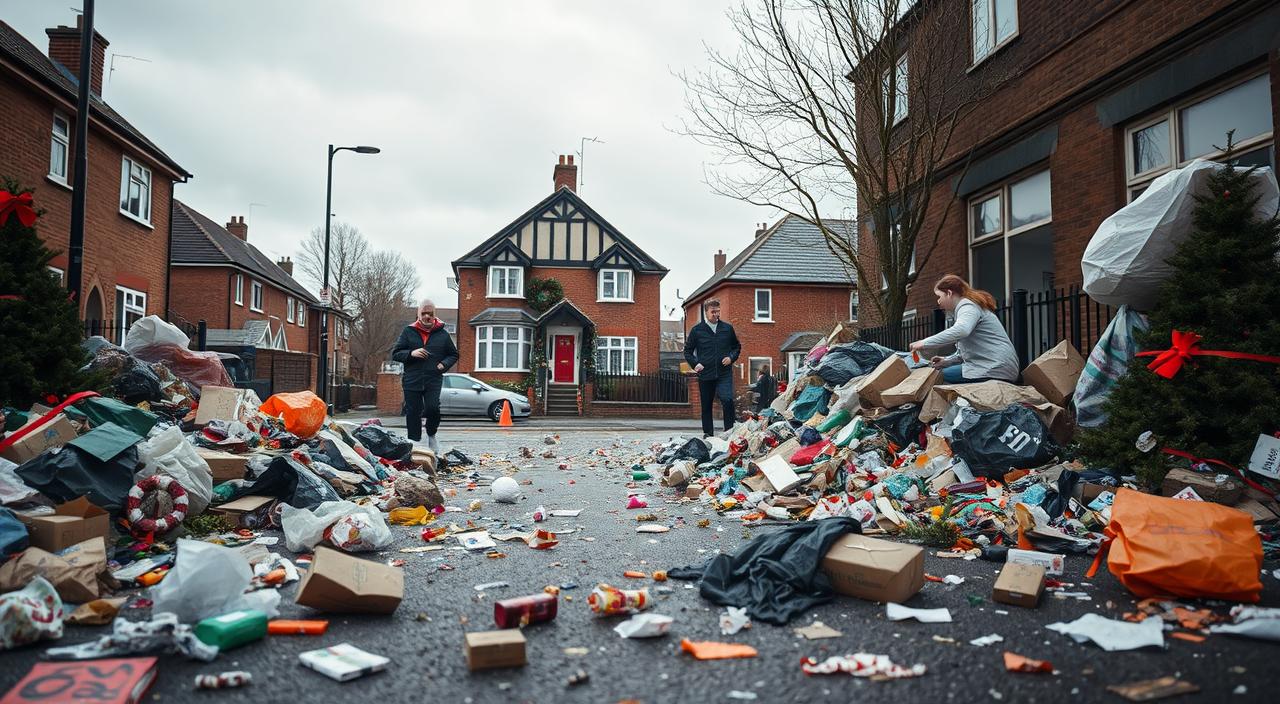
This surge may feel temporary, but its environmental consequences last far longer. Food waste breaks down into greenhouse gases, contaminated recycling loads are diverted to landfill, and replacing discarded items drives new manufacturing emissions. When multiplied across millions of homes, even small choices have national-scale effects.
This guide explains why seasonal waste matters, what is most commonly thrown away, and how households can reduce their impact through practical, realistic steps. From managing leftovers safely to recycling packaging correctly and choosing longer-lasting festive items, small changes can significantly cut emissions and costs year after year.
Key Takeaways
- Household rubbish rises by around 30% after Christmas across the UK
- Food waste, packaging, and non-recyclables are the main contributors
- Contaminated recycling increases landfill use and collection costs
- Smarter storage, reuse, and correct sorting reduce emissions
- Simple changes now prevent repeat waste next festive season
Why Post-Christmas Waste in the UK Matters for the Environment
A short period of excess creates a long-term environmental burden. Extra collections require more fuel, recycling centres face higher rejection rates, and landfill sites fill faster during winter months when waste processing is already challenging.
Local authorities must divert resources from other services to manage the spike. When bins overflow or recycling is contaminated, entire loads may be sent for disposal rather than recovery. This increases costs for councils and taxpayers while undermining national recycling targets.
Beyond logistics, the climate impact is significant. Food waste produces methane when landfilled, transport emissions rise with additional collections, and replacing discarded goods requires energy-intensive manufacturing. Preventing waste in the first place remains far more effective than managing it later.
The environmental impact of post christmas waste uk households produce is felt long after the celebrations end, particularly through increased landfill use and higher carbon emissions.
The Scale of the Problem: Festive Volumes and What Gets Thrown Away
Across the UK, households generate millions of tonnes of additional rubbish during the festive period. The most common items discarded include:
- Uneaten food and leftovers
- Cardboard boxes and wrapping paper
- Plastic packaging from gifts and food
- Decorations and unwanted presents
Estimates suggest that hundreds of thousands of tonnes of edible food are discarded each winter, alongside vast quantities of paper and plastic. Many of these materials are recyclable or reusable but are lost due to contamination, lack of sorting, or limited bin capacity.
Unwanted gifts alone account for tens of millions of pounds’ worth of discarded items annually, many of which are perfectly usable. When these products end up in landfill, the environmental cost includes not only disposal but also the wasted resources used to produce them.
How Seasonal Rubbish Drives Emissions
Waste generates emissions at every stage of its journey. Collection vehicles burn fuel, sorting facilities consume energy, and landfill sites release greenhouse gases over decades.
Food waste is particularly harmful. When organic matter decomposes without oxygen, it produces methane — a greenhouse gas far more potent than carbon dioxide. Preventing food waste is therefore one of the most effective ways households can reduce their environmental footprint.
Replacing discarded items adds further emissions. Manufacturing new goods requires raw materials, water, and energy, while transport and packaging add additional carbon costs. Repairing, reusing, or donating items avoids most of these impacts entirely.
Household Culprits and Recycling Contamination
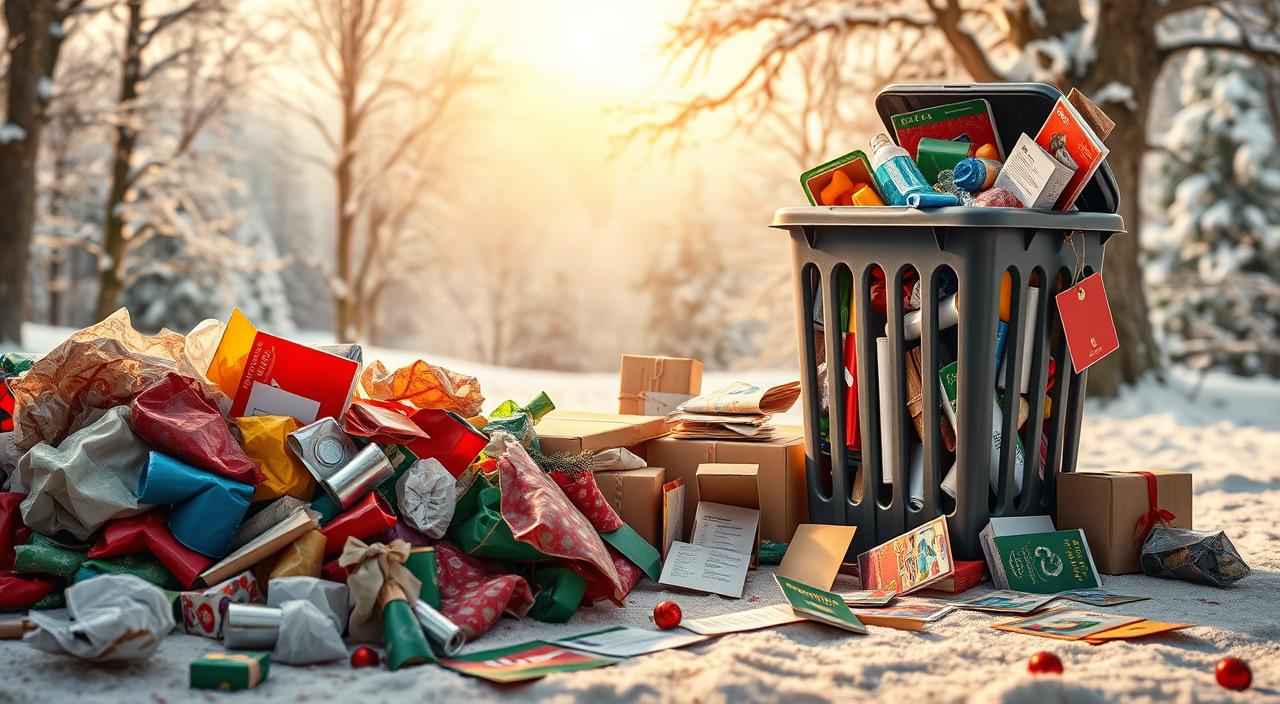
Certain festive items cause disproportionate problems within recycling systems. Non-recyclable materials mixed with paper or plastics can contaminate entire loads.
Common Problem Materials
| Waste Type | Typical Impact | Environmental Risk |
|---|---|---|
| Food leftovers | High seasonal volume | Methane emissions, pest issues |
| Plastic packaging | Large winter spike | Slow degradation, fossil fuel use |
| Glittered or laminated paper | Widely used | Contaminates recycling streams |
Items such as foil-coated wrapping paper, glittered cards, and laminated gift bags often look recyclable but are not accepted by most councils. When mixed incorrectly, they increase rejection rates and push otherwise recyclable materials into landfill.
Because collection rules vary by council, it is essential to check local guidance. You can find official advice via the UK government’s recycling guidance:
Cutting Food Waste After Christmas: Practical Steps That Work
Food waste accounts for a significant share of seasonal rubbish, yet it is also one of the easiest areas to improve with simple habits.
Plan Leftovers Early
After the main meals, take stock of what remains and plan how it will be used over the following days. Label containers with contents and dates, and prioritise items with shorter shelf lives.
- Turn roasted vegetables into soups or stews
- Use leftover meat in sandwiches, pies, or pasta dishes
- Freeze excess portions promptly to extend usability
Store Food Safely
Cool cooked food quickly and refrigerate within two hours. Freeze surplus items you cannot eat within two days, and defrost safely in the fridge when needed.
Many councils provide food waste collections even during winter, although schedules may change after holidays. Using the food caddy correctly keeps organic waste out of landfill and supports anaerobic digestion, which produces renewable energy.
For practical meal-saving tips, see: 👉 https://lovefoodhatewaste.com/
Composting at Home
If you compost at home, ensure your system can handle cooked food safely. Use sealed containers, add dry material to balance moisture, and avoid overfilling during cold weather. Proper management prevents odours and pests while reducing bin use.
Recycling Christmas Packaging the Right Way
Correct sorting protects recycling streams and maximises material recovery.
Wrapping Paper and Cardboard
Use the “scrunch test”: if paper scrunches and stays crumpled, it is usually recyclable. If it springs back, it belongs in the general waste bin.
- Remove tape, ribbons, and labels
- Flatten cardboard boxes and keep them dry
- Avoid placing wet or food-stained cardboard in recycling
Cards and Gift Tags
Plain paper cards and tags are generally recyclable or compostable. Cards with glitter, foil, or plastic coatings should be disposed of as general waste.
Consider reusing old cards as gift tags next year to reduce material use.
Plastics and Mixed Materials
Rinse containers before recycling to avoid contamination. Check symbols carefully, as not all plastics are accepted everywhere.
Decorations, Trees, and Seasonal Items
| Item | Best Disposal Option | Key Consideration |
|---|---|---|
| Real trees | Council collection or drop-off | Remove all decorations |
| Artificial trees | Reuse or donate | Long lifespan reduces impact |
| Lights | Electrical recycling point | Choose energy-efficient models |
Real trees are often chipped for compost or park maintenance, while artificial trees should be reused for many years to offset their manufacturing footprint. Decorative lights should be recycled as electrical waste rather than placed in household bins.
Dealing With Unwanted Gifts Responsibly
Unwanted presents do not have to become rubbish. Returning items, re-gifting thoughtfully, selling second-hand, or donating to charity keeps products in use and reduces demand for new manufacturing.
If you are decluttering larger volumes after the holidays, planning a structured clear-out helps prevent unnecessary disposal. You may find our internal guide helpful: 👉 See our in-depth article on household decluttering and responsible disposal
(Internal link suggestion: Household decluttering and recycling guide)
Preparing Better for Next Year
Reducing future seasonal waste starts with smarter choices:
- Choose recyclable or reusable wrapping
- Avoid plastic-heavy packaging
- Plan realistic food quantities
- Create a simple home recycling station
Checking council collection schedules in advance also prevents overflow and contamination when services change during public holidays.
Conclusion
The environmental impact of post-Christmas waste in the UK is significant, but it is also largely preventable. By managing leftovers carefully, recycling correctly, and avoiding non-recyclable materials, households can dramatically reduce seasonal rubbish and emissions.
Small actions — freezing food, sorting paper properly, keeping glitter out of recycling — scale into national benefits when adopted widely. Over time, these habits reduce landfill use, lower council costs, and keep valuable materials in circulation.
As the festive season ends, take one step that makes next year easier. Set up clearer sorting at home, choose simpler packaging, or plan meals more carefully. These small changes ensure fewer bins overflow, fewer lorries are needed, and fewer resources are wasted — long after the decorations come down.