For the past two decades, the nation has made considerable strides in how it handles its discarded materials. High recovery rates have been a notable success story across many regions.
This progress is now under pressure. Environmental demands are growing and the volumes of rubbish we produce continue to rise.
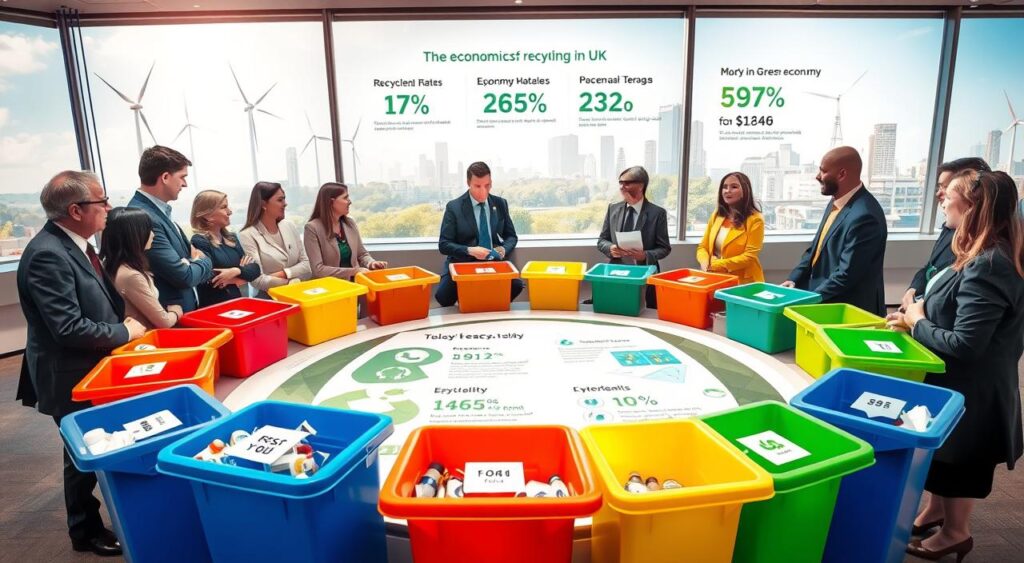
Despite strong performance, significant challenges remain. Issues like contamination in bins, limited reprocessing infrastructure, and inconsistent local council rules hinder national targets.
The country stands at a crossroads. Achieving a net-zero future requires a fundamental shift in how we manage our resources. Understanding the financial aspects of this system is essential for long-term sustainability.
The path forward relies on a powerful combination. Policy reform must work hand-in-hand with technological innovation and a strong sense of collective responsibility.
Key Takeaways
- The UK has achieved high material recovery rates over the last twenty years.
- Growing waste volumes are placing unprecedented strain on existing systems.
- Contamination and inconsistent local policies are major hurdles to national targets.
- A net-zero carbon future demands a complete rethink of resource management.
- Future success hinges on integrating policy updates with technological advances.
- Continued public engagement is a cornerstone of any effective system.
- The ultimate goal is building a true circular economy for lasting sustainability.
Overview of the UK Recycling Landscape
A patchwork of different rules and services defines how materials are collected and processed across the country. This inconsistency between local councils is one of the most significant challenges for the nation’s waste management.
Households and businesses face confusion over what can go in each bin. This often leads to contamination, where non-recyclable items spoil entire loads of good materials.
Complex, multi-layered packaging adds to the problem. Many everyday items are difficult to sort correctly with today’s infrastructure.
The result is that a considerable amount of useful resource still ends up in landfill. This undermines progress towards a more circular economy.
Recognising this, the government has set a goal to standardise collections across England by 2025. Clear, consistent rules are seen as vital for improving system efficiency and cutting costs for sorting facilities.
Recycling Economics UK: Current Trends and Analysis
A decade of landfill tax escalation provided a powerful financial incentive for businesses and councils to find alternatives to disposal. This period saw the achievement of significant “easy wins” in material recovery.
Historical Growth and Performance
The 2000s were a time of rapid improvement. The rising cost of sending waste to landfill made sorting and recovering materials much more attractive.
Greater business awareness of the economic benefits accelerated this shift. However, projections for strong GDP and population growth in the following decade signalled future pressure on management systems.
Recent Developments in Recycling Rates
Today, the landscape is more complex. The initial phase of high gains is largely complete, demanding more ambitious waste prevention plans.
Research identified potential savings of millions of tonnes by focusing on specific materials. A core vision emerged for the national economy: to use far fewer raw resources and produce substantially less waste.
The shift towards a circular model offers considerable rewards. Government analysis suggests businesses could benefit by up to £23 billion annually through better resource efficiency.
Impact of Policy Reforms and Legislative Changes
From 2025, a new era of consistency and producer accountability will define the rules for packaging and collections in England. Two major initiatives are driving this shift.
The Simpler Recycling plan and Extended Producer Responsibility (EPR) form the core of the new framework. Their goal is to create a more efficient and effective system.
Upcoming Legislation and Its Implications
The Environment Act mandates standardised collections for all local authorities. This means every council must collect the same set of materials from households.
Paper, cardboard, plastics, metals, and food waste will be collected everywhere. This move aims to end public confusion and drastically improve the quality of material sent for processing.
Clearer rules should lead to higher participation and less contamination. Better quality waste streams make the entire system more cost-effective.
Extended Producer Responsibility (EPR) and Standardisation
EPR legislation places a new financial duty on packaging manufacturers. They will be responsible for the full net cost of managing the packaging they place on the market.
This policy is designed to incentivise sustainable packaging design at the source. The aim is to reduce the environmental impact of discarded materials.
For businesses, it creates a direct link between packaging choices and management costs. The funds raised will support local collection services.
Together, these reforms strengthen the push towards a circular economy. They provide a more robust framework for national waste management.
| Policy Initiative | Key Feature | Expected Impact |
|---|---|---|
| Simpler Recycling | Mandates identical household collections across England. | Reduces confusion, improves material quality, and lowers sorting costs. |
| Extended Producer Responsibility (EPR) | Makes producers pay for packaging collection and processing. | Drives eco-design, funds local services, and provides better system data. |
| Combined Effect | Standardised supply meets funded, efficient processing. | Creates a clearer economic model with tangible benefits for the wider economy. |
Technological Innovations and Their Role in Recycling
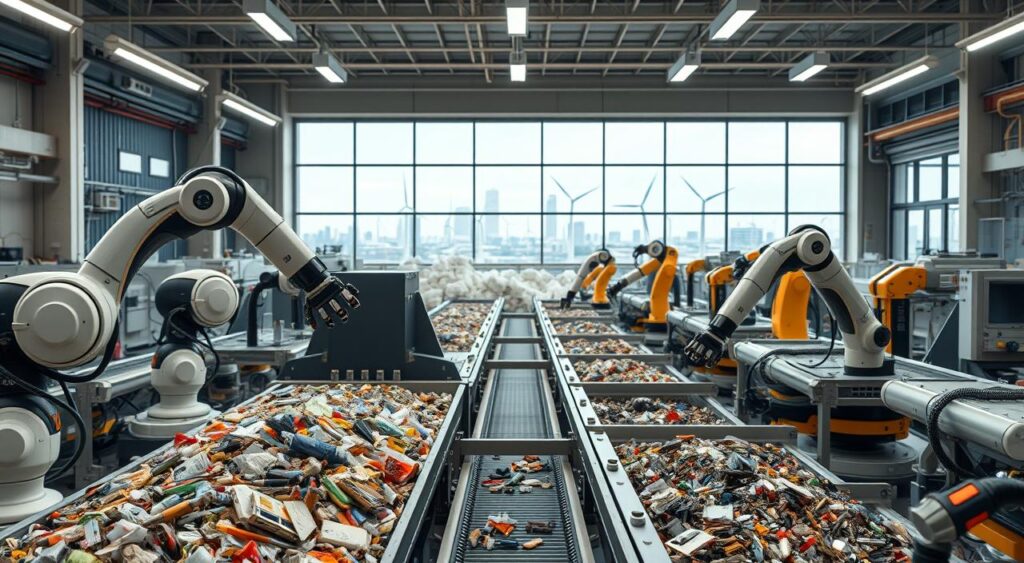
From sensor-equipped bins to AI-powered sorting lines, technological breakthroughs are revolutionising resource recovery. These tools address core challenges in modern waste management.
They bring new precision to handling discarded materials. This shift is vital for improving system performance and sustainability.
Smart Bins and Data-Driven Collection Systems
Intelligent containers fitted with sensors can detect fill levels. They automatically notify collection services when they need emptying.
This data allows local authorities to optimise lorry routes. The result is fewer unnecessary trips and lower fuel use.
Efficiency gains benefit both households and businesses. Services become more responsive and operational costs fall.
Artificial Intelligence in Waste Sorting
Artificial intelligence is transforming material recovery facilities. Advanced vision systems and machine learning identify different plastics, metals, and paper types with high accuracy.
These AI systems work faster and more consistently than human operators. They drastically reduce contamination in sorted streams.
Better sorting means more high-quality material is recovered for reprocessing. This innovation strengthens the entire management chain.
Meanwhile, chemical processes are emerging to tackle hard-to-recycle plastics. They break down polymers to create new materials, closing the loop on waste destined for landfill.
Economic Benefits of Recycling for the British Economy
Managing resources more effectively creates tangible benefits for employment and industrial competitiveness. The move towards a circular model offers strong financial rewards alongside environmental gains.
Two primary areas showcase this positive impact: job growth and significant cost reductions.
Job Creation and Market Expansion
The circular economy has been a major driver for employment. Nearly 90,000 new roles were added to this sector between 2014 and 2019.
Total employment reached almost 560,000 people. This growth spans waste management, renewable energy, and sustainable product development.
New jobs appear at various facilities, from collection and sorting to advanced manufacturing. This increase in skilled work helps expand the market for recycled goods.
Cost Savings through Energy and Raw Material Efficiency
Using reprocessed materials slashes energy use and costs. For example, making aluminium cans from old ones uses 95% less energy than from virgin resources.
Such efficiency translates into major financial benefits. Government data suggests businesses could save up to £23 billion annually through better resource use.
These savings improve competitiveness and support investment in innovation. They demonstrate the clear economic advantage of sustainable management practices.
| Benefit Category | Key Data | Economic Impact |
|---|---|---|
| Job Creation | ~90,000 new jobs (2014-2019); ~560,000 total employed. | Expands skilled workforce and stimulates local economies. |
| Energy Efficiency | Recycling aluminium saves 95% energy vs. virgin material. | Lowers production costs and reduces operational expenses for business. |
| Business Resource Efficiency | Potential annual savings of £23 billion for UK companies. | Boosts profitability and funds further innovation in products. |
Waste Management and the Circular Economy
Effective collaboration across industries is essential for building a true circular economy. This model moves beyond the old ‘take-make-dispose’ approach.
It treats discarded materials as valuable resources for new production. The roleof modern waste management is to enable this shift.
Reducing Contamination and Enhancing Resource Recovery
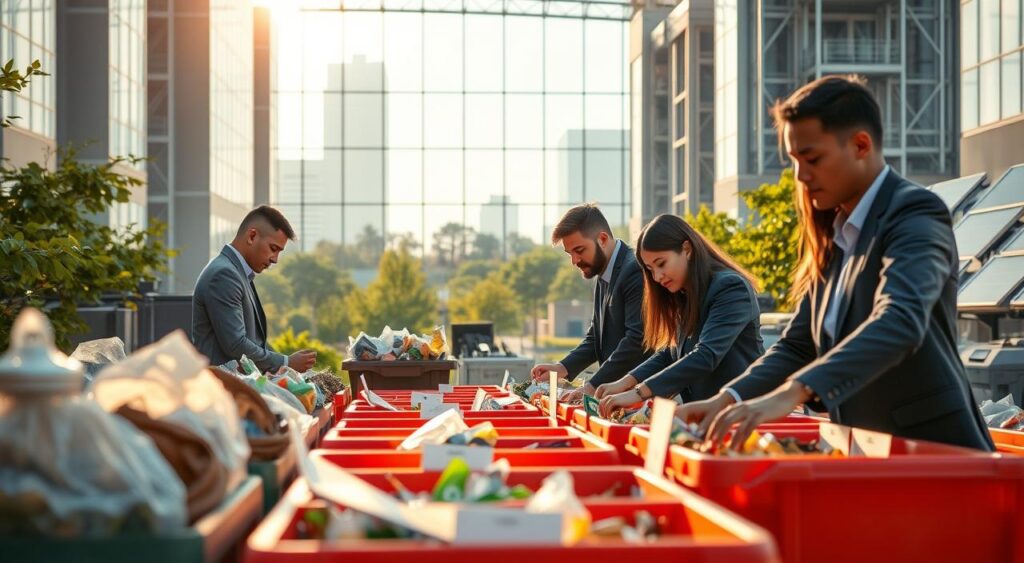
Clean material streams are the foundation of an effective system. Contamination from non-recyclable items spoils entire loads.
This loss has a direct impact on system costs and efficiency. Clear communication with households and better sorting services are key.
Enhanced recovery turns more waste into high-quality feedstock. This progress is vital for the circular economy.
The Role of Industry Collaboration in a Circular Model
Forward-thinking businesses, government bodies, and community groups are finding common ground. They pool resources and expertise to extend their impact.
This partnership can create new business models and joint ventures. A prime example is the adoption of closed-loop systems by brands.
Products are designed to be collected and remade into new material. Such collaboration is a core component of sustainable management.
| Aspect | Linear Waste Model | Circular Collaboration Model |
|---|---|---|
| Resource View | Waste is a cost to be disposed of. | Waste is a valuable resource for new products. |
| Key Stakeholders | Act in isolation (producer, council, processor). | Businesses, government, and communities work together. |
| Primary Driver | Minimising disposal costs for individual entities. | Maximising material value and creating shared economic benefits. |
Business Opportunities and Investment in Recycling
Investing in modern waste handling systems is no longer just an environmental choice. It is a strategic business decision with clear financial benefits.
Forward-thinking companies unlock new revenue streams by treating discarded materials as valuable resources. The circular economy model incentivises this transformation.
Innovative Business Models in Waste Management
New approaches move beyond basic collection services. Many firms outsource material handling to professional management companies.
This can secure rebates and improve operational efficiency. Other models focus on closed-loop systems where products are designed for recovery.
Investment Trends and Economic Incentives
Initial capital outlay for training, equipment, and infrastructure leads to strong long-term returns. Researching the potential return on investment is essential for planning.
Reducing waste sent to landfill lowers management costs for collection and disposal. It also enhances a company’s reputation, potentially increasing demand.
Government policies and consumer preferences drive capital towards green ventures. Staying compliant avoids environmental liability costs.
These factors make sustainable practices a sound financial choice for business.
Addressing Challenges and Future Directions in Recycling
The next phase of material recovery demands tackling deep-seated infrastructural and behavioural obstacles. Ambitious waste prevention plans are now essential from all nations to set a clear framework for action.
This involves both upgrading physical facilities and encouraging smarter consumption habits across society.
Overcoming Infrastructure Limitations
Inconsistent systems across local authorities remain a significant barrier. This patchwork approach increases handling costs and reduces the quality of materials collected.
Addressing these limitations is crucial for meeting national targets. Investment in modern sorting facilities and standardised collections will strengthen the entire management chain.
Strategies for Waste Reduction and Improved Efficiency
Improving efficiency requires a combination of policy reform and technological innovation. Consumers play a vital role by being mindful of purchases and disposal.
Simple actions like rinsing containers and avoiding plastic films make a substantial difference. These steps help ensure more materials are successfully reprocessed.
Businesses and households can adopt practices that generate less waste. Choosing products with recyclable packaging supports better material recovery.
Collective responsibility is key to improving performance across all services. This shared effort turns discarded items into a valuable resource.
Conclusion
Building a future where materials circulate continuously offers a blueprint for long-term prosperity. Sustainable waste management is a powerful economic driver, not just an ecological need.
Embracing the circular economy unlocks significant financial benefits. It creates jobs and reduces the costs linked to waste.
Future success relies on the commitment of businesses, households, and government. They must improve collection systems and infrastructure together.
Ongoing investment in technology is vital. It helps overcome challenges and treats discarded items as valuable resources.
This transition to a more efficient system needs collective action. It ensures material recovery remains a cornerstone of a robust economy.