Understanding how to dispose of materials correctly has become an essential responsibility for households and businesses alike. As recycling technology improves and environmental policies evolve, the need for clear guidance is greater than ever.
Across the United Kingdom, recycling systems have changed dramatically during the last decade. Modern processing facilities rely on advanced sorting technology that demands cleaner and better-separated materials from kerbside collections. When items are incorrectly placed in recycling bins, contamination can occur, reducing the quality of otherwise reusable materials.
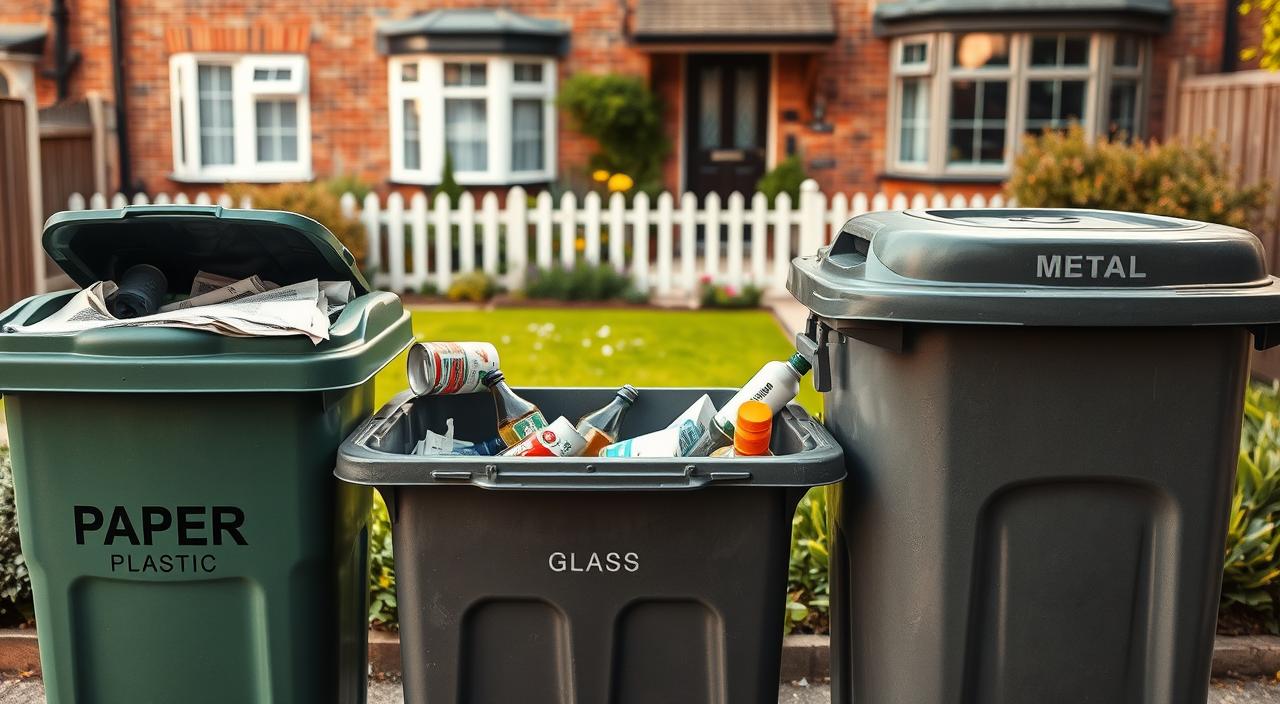
This guide explains what can be recycled UK households commonly generate, along with practical preparation tips, specialist disposal options, and ways to prevent common recycling mistakes. Whether managing waste at home or in a commercial setting, these insights will help you contribute to a more sustainable future.
Key Takeaways
- Proper sorting of materials reduces contamination and improves recycling efficiency.
- UK recycling policies increasingly prioritise quality over quantity.
- Paper, cardboard, glass, and metals are the most widely accepted recyclable materials.
- Electronics, batteries, and hazardous items require specialist disposal points.
- Simple preparation steps such as rinsing containers greatly improve recycling success.
Understanding Recycling in the United Kingdom
Modern recycling systems are designed to support a circular economy, where materials remain in use for as long as possible rather than being discarded after a single lifecycle.
Instead of following a traditional “take-make-dispose” model, the circular economy focuses on recovering resources from waste streams and converting them into new products. This reduces pressure on natural resources while lowering energy consumption.
In the UK, government policies and council programmes encourage residents and businesses to participate in recycling initiatives. According to the UK Department for Environment, Food & Rural Affairs, nearly half of the country’s waste is now recycled or reused.
Despite this progress, contamination remains a significant challenge. Incorrectly sorted materials can cause entire batches to be rejected and sent to landfill.
How Recycling Practices Have Evolved
Recycling systems today are far more advanced than those used twenty years ago. Improvements in technology and environmental regulations have transformed how waste is processed.
Policy Changes Over Time
Earlier recycling programmes focused primarily on increasing the volume of materials collected. Councils encouraged residents to separate basic categories such as paper, glass, and plastic.
Today, the emphasis is on clean, high-quality materials that can be efficiently reprocessed. Many recycling plants use automated equipment that requires properly prepared inputs.
This shift means that guidelines for household recycling continue to evolve.
Technological Advancements
Modern recycling facilities use a combination of technologies including:
- optical sorting sensors
- automated conveyors
- air classification systems
- magnetic separation
These systems identify and separate materials at high speed, allowing large quantities of waste to be processed efficiently.
However, these machines can be disrupted by contamination such as plastic films, food residue, or non-recyclable items.
The Most Common Household Recyclable Materials
For most households, four materials dominate recycling collections: paper, cardboard, glass, and metals.
These materials are widely accepted by local councils because they are relatively easy to reprocess.
Paper and Cardboard
Paper and cardboard remain some of the most successfully recycled materials in the UK.
Examples include:
- newspapers
- magazines
- office paper
- cereal boxes
- delivery packaging
To ensure successful recycling:
- keep materials dry
- flatten cardboard boxes
- remove tape and plastic packaging
Food contamination can render paper unusable, so greasy pizza boxes should usually be placed in general waste.
Glass Containers
Glass bottles and jars are highly recyclable and can be reused repeatedly without losing quality.
Common items include:
- drink bottles
- food jars
- condiment containers
Before recycling:
- rinse containers
- remove lids and caps
- avoid including broken drinking glasses or mirrors
Items such as Pyrex cookware contain different glass compositions and require specialist disposal.
Metal Packaging
Metals like steel and aluminium are extremely valuable recycling materials.
Examples include:
- food tins
- drink cans
- aluminium trays
Simply rinse the container and crush cans if possible to save space in your recycling bin.
Understanding Plastic Recycling Codes
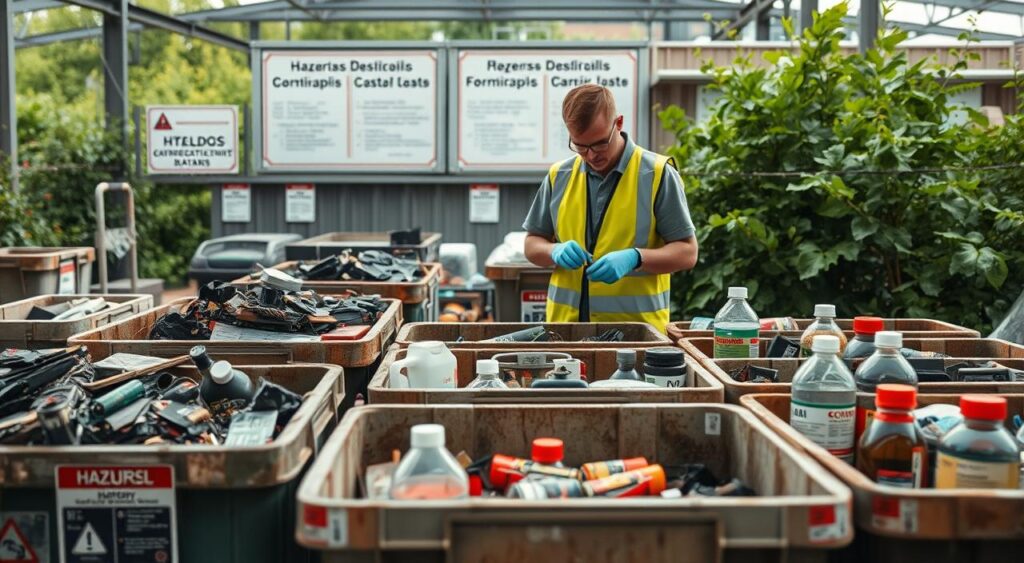
Plastic recycling is more complex than other materials. Each plastic item contains a resin identification code that indicates its chemical composition.
These codes range from 1 to 7 and help recycling facilities determine how the material should be processed.
The most commonly accepted plastics include:
- PET (#1) – drink bottles
- HDPE (#2) – milk containers and detergent bottles
Other plastics may require specialist collection points.
| Plastic Code | Material Type | Common Examples |
|---|---|---|
| 1 | PET | Water and soft drink bottles |
| 2 | HDPE | Milk bottles, shampoo containers |
| 3 | PVC | Cling film, pipes |
| 4 | LDPE | Plastic bags |
| 5 | PP | Yogurt pots |
| 6 | PS | Polystyrene |
| 7 | Mixed | Various plastics |
Many supermarkets now provide recycling bins for plastic bags and films, which should not be placed in standard recycling bins.
Understanding these codes helps reduce “wishcycling”, where people place non-recyclable items into recycling bins hoping they will be processed.
Household Recycling Dos and Don’ts
Knowing the correct preparation techniques makes recycling far more effective.
| Material | Do | Don’t |
|---|---|---|
| Paper & Cardboard | Keep dry and flattened | Include food-soiled paper |
| Glass | Rinse bottles and jars | Recycle mirrors or drinking glasses |
| Metal | Clean tins and cans | Mix with hazardous waste |
| Plastic | Check recycling codes | Include plastic films or bags |
These simple steps help maintain the quality of recyclable materials.
Recycling Electronics and Hazardous Waste
Some household items require special disposal because they contain hazardous components.
These materials must never be placed in normal recycling bins.
Electrical Equipment
Waste electrical and electronic equipment (WEEE) includes any item with a plug or battery.
Examples include:
- kettles
- laptops
- mobile phones
- cables and chargers
Many councils provide dedicated collection points at recycling centres for electronic devices.
Retailers also often offer take-back programmes when purchasing new appliances.
Batteries
Batteries pose a significant fire risk when damaged or crushed in waste collection vehicles.
They should always be recycled through dedicated collection bins found in supermarkets or recycling centres.
Common battery types include:
- AA and AAA batteries
- lithium batteries
- button cells
- rechargeable battery packs
Unexpected Items That Can Be Recycled
Many everyday objects can be recycled through specialist programmes or alternative disposal routes.
Examples include:
- aerosol cans
- aluminium foil
- textiles and clothing
- mattresses
- coffee pods
Charity shops also play an important role in reducing waste by accepting reusable clothing and household items.
Supermarket collection points are increasingly common for difficult-to-recycle materials such as plastic bags or small electrical items.
Recycling in Construction and Commercial Environments
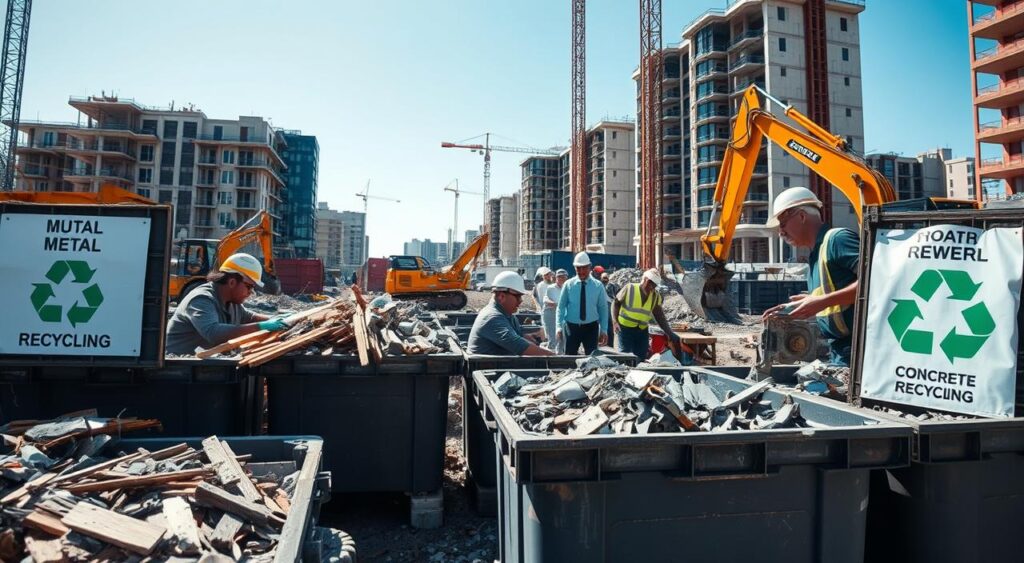
Large-scale waste management plays a significant role in the UK recycling industry.
Construction sites generate vast quantities of materials including:
- bricks
- concrete
- metals
- timber
- soil
When separated properly, these materials can be reused or processed into new products.
For example:
- crushed concrete can become road aggregate
- scrap metal can be melted and reused
- timber can be converted into biomass fuel
Construction recycling reduces landfill use while lowering project costs.
Businesses that produce large volumes of waste often rely on professional waste management services to ensure compliance with environmental regulations.
Environmental and Community Benefits of Recycling
Effective recycling delivers significant environmental benefits.
These include:
- conservation of natural resources
- reduced energy consumption
- lower greenhouse gas emissions
- reduced landfill use
In addition to environmental benefits, recycling also supports local economies.
The recycling industry creates thousands of jobs across collection, sorting, processing, and manufacturing sectors.
When households recycle correctly, councils spend less money on waste disposal, allowing resources to be redirected into community services.
Avoiding Common Recycling Mistakes
One of the most common problems in recycling systems is contamination.
This occurs when non-recyclable items are mixed with recyclable materials.
Examples include:
- food residue on packaging
- plastic bags in recycling bins
- broken glass mixed with containers
To avoid these mistakes:
- Always rinse containers.
- Flatten cardboard boxes.
- Check local recycling rules.
- Separate hazardous items.
These simple actions dramatically improve recycling efficiency.
Conclusion
Recycling plays a vital role in protecting natural resources and reducing environmental impact. When individuals understand what can be recycled UK households commonly generate, they help create a cleaner and more efficient waste management system.
By preparing materials correctly, using specialist recycling centres when needed, and staying informed about local council rules, residents and businesses can significantly reduce contamination.
Small actions taken every day contribute to a larger collective impact. As recycling technology and environmental policies continue to evolve, informed participation remains essential.