All discarded materials affect our planet, but some categories present a far greater threat than others. Understanding which substances cause the most severe damage is crucial for effective protection.
The primary concerns are toxic, hazardous and harmful waste. These types contain chemicals or properties that can poison ecosystems and harm human health for generations.
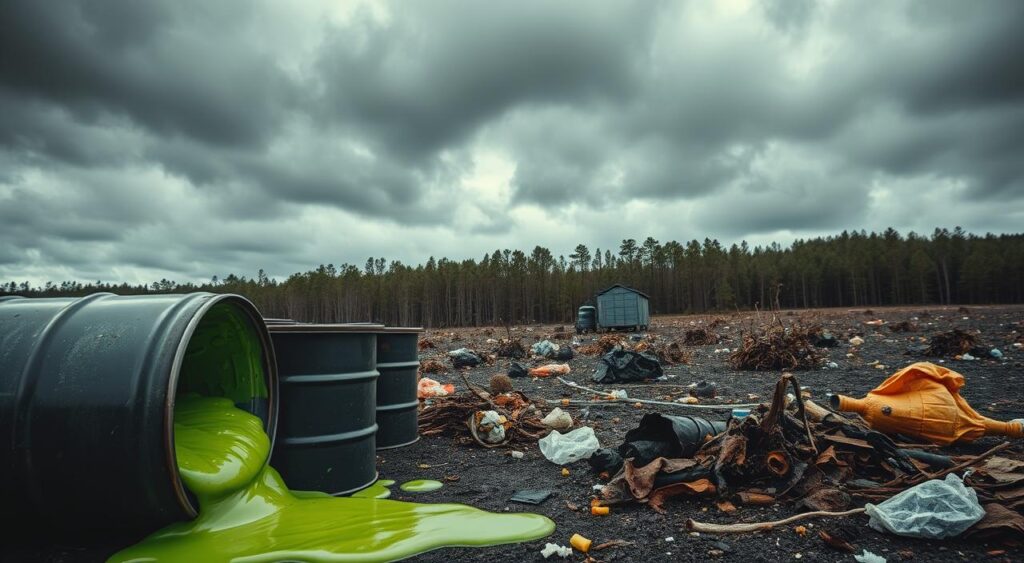
The scale is staggering. In 2019 alone, the United States generated over 34.9 million tonnes of hazardous material. UK data from 2011 highlights key problem types like contaminated oil, infected clinical waste, and construction materials containing asbestos.
Specific industries are responsible for a disproportionate share of this pollution. The environmental impact travels through air, water, and soil, creating complex challenges.
This article provides a factual breakdown of the worst offending waste types. It aims to empower readers with knowledge about industrial impacts and personal consumption.
Key Takeaways
- Not all discarded materials pose an equal threat to ecological systems.
- Toxic and hazardous wastes are the primary categories of concern due to their persistent, poisonous nature.
- The volume of hazardous material produced globally is immense, as shown by US and UK statistics.
- Certain industrial sectors contribute significantly more to this problem than others.
- Pollution from these wastes spreads through multiple environmental mediums: air, water, and land.
- Understanding these distinctions is the first step towards advocating for better environmental protection.
Industrial Sources of Toxic and Hazardous Waste
The origin of many severe environmental pollutants can be traced directly to large-scale industrial operations. Specific sectors have production processes that inherently generate dangerous by-products.
Mining, Extraction and Petroleum Industries
Mining and extraction utilise toxic chemicals like cyanide and mercury. These substances contaminate soil and water, damaging local ecosystems.
The petroleum industry contributes through oil spills and refining emissions. Petrochemical production releases hazardous chemicals into the environment.
Electronics, Manufacturing and Construction Processes
Manufacturing sectors, including automotive and textiles, generate substantial toxic waste. Improper handling of hazardous materials poses significant risks.
Electronic waste contains heavy metals like lead and cadmium. These can leach from landfills, causing long-term contamination.
Construction processes contribute through materials containing asbestos and lead-based paints. Demolition and improper disposal create further environmental hazards.
Identifying the Most Harmful Waste in Industry
Not all dangerous industrial by-products are created equal. Toxic substances represent the pinnacle of environmental threat.
Clear definitions are vital for proper handling and regulation. This section clarifies the critical distinctions.
Defining Toxic vs Hazardous Materials
All toxic waste is classified as hazardous. However, not all hazardous waste meets the toxicity threshold.
Toxic waste is defined as poisonous, radioactive, or carcinogenic. It can also be mutagenic, teratogenic, or bioaccumulative.
Hazardous materials are categorised by the EPA based on four traits. These are ignitability, corrosivity, reactivity, and toxicity.
Examples from Chemical and Pharmaceutical Sectors
Common toxic chemicals include asbestos, formaldehyde, and lead. Mercury and certain pesticides are also key examples.
These substances persist in ecosystems and accumulate in food chains. They pose severe long-term risks.
Typical hazardous waste products include used motor oil and car batteries. Some paints, solvents, and cleaners also fall into this category.
The chemical industry generates corrosive acids and reactive compounds. Pharmaceutical production uses ignitable solvents and toxic organic materials.
| EPA Characteristic | Description | Common Industrial Example |
|---|---|---|
| Ignitability | Easily flammable at low temperatures | Waste solvents (e.g., alcohol, ether) |
| Corrosivity | Highly acidic or alkaline, damages materials | Sulphuric acid, sodium hydroxide |
| Reactivity | Unstable, can explode or release toxic gases | Cyanide-bearing waste, lithium-sulfur batteries |
| Toxicity | Contains substances causing health or ecological harm | Pesticides, heavy metals like lead and mercury |
Environmental and Human Health Impacts
When dangerous materials enter our surroundings, they trigger a cascade of damage across air, water, and soil. This contamination creates a dual crisis, affecting both planetary systems and public wellbeing.
Effects on Air, Water and Soil Quality
Air pollution from industrial emissions is a major concern. It contributes to an estimated 7 million premature deaths globally each year.
Water sources face severe contamination. Over 1 million deaths annually are linked to water pollution, while 14 million tonnes of plastic enter the oceans.
Soil absorbs approximately 400 million tonnes of hazardous material generated yearly. This seepage disrupts agriculture and food security.
| Environmental Medium | Primary Pollutants | Key Statistic | Main Effects |
|---|---|---|---|
| Air | Industrial emissions, incineration particulates | ~7 million deaths per year | Respiratory illnesses, climate change |
| Water | Chemical runoff, plastics, heavy metals | 14M tonnes plastic in oceans annually | Ecosystem poisoning, drinking water contamination |
| Soil | Hazardous waste seepage, pesticides | 400M tonnes of hazardous waste generated yearly | Crop contamination, long-term land degradation |
Risks to Human Health and Biodiversity
Chemicals from toxic waste enter food chains. Through bioaccumulation, they become more concentrated, leading to chronic human health issues like cancer and organ damage.
Marine biodiversity suffers enormously. Plastic pollution causes 100,000 marine mammal deaths annually, with 66% of whale and dolphin species having consumed plastic.
Workers in affected industries and nearby communities face the highest risks. This creates urgent environmental justice concerns.
Sector Spotlight: Chemicals, Manufacturing, Pharmaceutical & Electronics
The chemical, manufacturing, pharmaceutical, and electronics sectors collectively drive a significant portion of global hazardous material generation. Each sector produces distinct by-products that pose serious ecological threats.
The broader manufacturing industry encompasses operations from automotive to textiles. Each sub-sector generates substantial hazardous materials, including heavy metals from metalworking.
Waste Generation in Chemical and Pharmaceutical Industries
Chemical manufacturing tops the list as the single largest producer of toxic material. The waste generated by this industry includes strong acids, bases, flammables, and virtually every category of dangerous chemical.
The pharmaceutical healthcare sector plays an essential role in society. However, pharmaceutical healthcare production processes often involve hazardous chemicals that contaminate water sources. Improper disposal of unused medications further pollutes soil and water supplies.
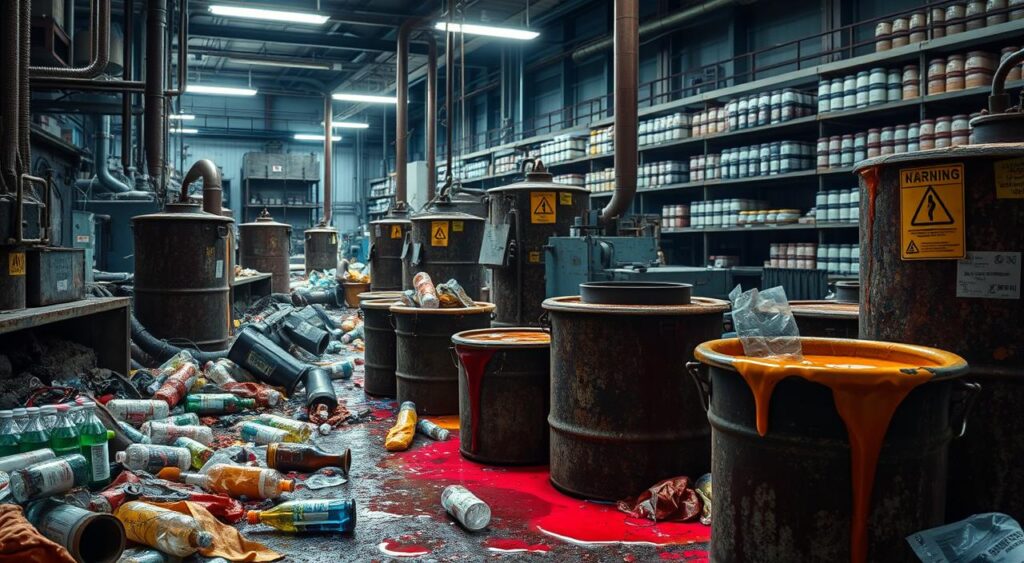
Electronic Waste and Its Global Implications
The technology industry and electronics sector fuel a rapid rise in discarded devices. The waste generated from these items contains heavy metals like lead and cadmium that leach into environments.
Currently, around 15.1 billion internet-connected devices exist worldwide. This number is set to double to over 29 billion by 2030. The IT sector’s footprint extends beyond discarded items; it will account for 7-20% of global electricity demand and emit 5.5% of emissions.
| Industrial Sector | Primary Waste Types | Key Environmental Concern |
|---|---|---|
| Chemical Manufacturing | Strong acids/bases, flammable solvents, toxic chemicals | Broad-spectrum toxicity, water and soil contamination |
| Pharmaceutical Healthcare | Process chemicals, active pharmaceutical ingredients (APIs) | Water source pollution, endocrine disruption in wildlife |
| Manufacturing Industry | Heavy metals, chemical solvents, contaminated organic waste | Diverse pollution streams from multiple sub-sectors |
| Electronics & Technology Industry | Discarded electronics containing lead, mercury, cadmium; energy consumption | Landfill leaching, resource depletion, high carbon emissions |
Effective Waste Management and Regulatory Frameworks
Robust legal frameworks and industry standards form the backbone of effective environmental protection against dangerous materials. These systems work together to minimise harm from hazardous waste.
UK and International Environmental Regulations
Stringent rules govern the handling, transport, and disposal of hazardous waste. Key US laws like the Clean Air Act and Resource Conservation and Recovery Act set global benchmarks.
The EPA notes over 34.9 million tonnes of hazardous waste was generated in 2019 alone. Its lists specify chemicals and industrial processes requiring control.
In England, from October 2023, businesses faced a ban on selling single-use plastic plates, cutlery, and balloon sticks. This extends earlier prohibitions on straws and stirrers.
Best Practices in Waste Handling and Disposal
Proper segregation and secure containment are fundamental for companies. Safe transportation and approved treatment methods follow established processes.
All businesses must consult local regulations and environmental agencies. This ensures compliance and avoids legal liabilities while supporting environmental protection.
Innovative Technologies and Renewable Energy Solutions
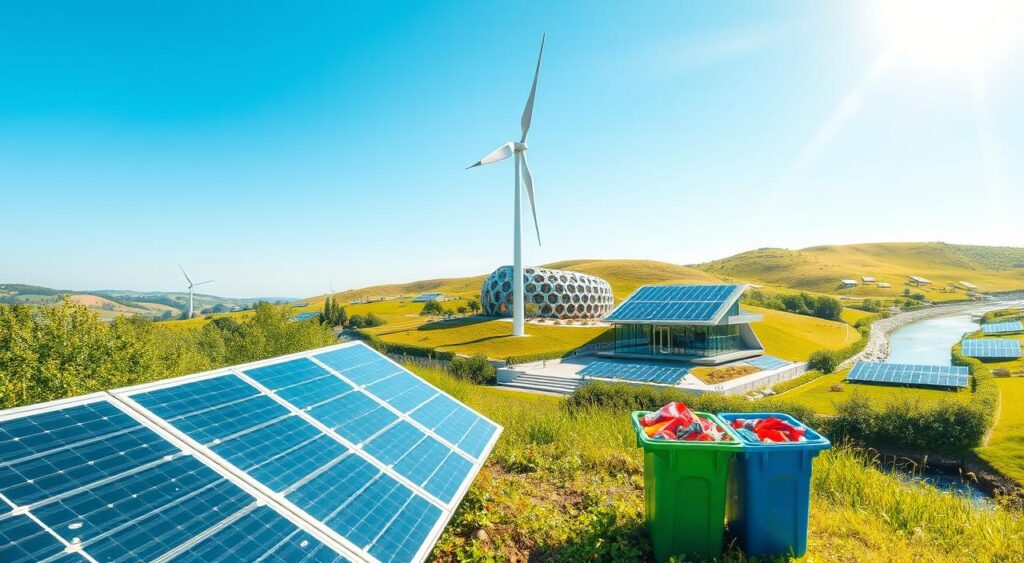
A fundamental shift is underway, moving from managing discarded materials after they are created to preventing their generation at source through advanced technologies. This proactive approach is key to reducing industrial impact on the environment.
Advances in Waste Reduction and Recycling Technologies
Cutting-edge innovation is transforming recycling. New systems enable the recovery of valuable resources from complex streams.
Key developments include:
- AI-powered sorting for precise material separation.
- Chemical processes that break down plastics to their basic molecules.
- Using microorganisms to extract metals from old electronics.
The growth of renewable energy is equally transformative. Solar panels and wind turbines now power operations without the toxic by-products of fossil fuels.
This shift has led to record-low coal use in many nations. It directly cuts pollution from industrial production.
Industry-specific advances are also vital. Cleaner extraction methods in mining and advanced wastewater treatment in pharmaceuticals show how technology supports sustainability.
Government Policies and Environmental Protection in the UK
Legislative action in the UK directly shapes how industries manage their environmental footprint. Government policy sets binding targets for reducing emissions and curbing pollution from the sectors with the largest impact.
These regulations compel companies and businesses to adopt cleaner practices. The goal is to lessen the overall impact environment faces from industrial activity.
Influence of Legislation on Waste Management
Laws provide the framework for handling materials and controlling outputs. They target the industry responsible for the highest greenhouse gas outputs.
The energy sector, generating up to 37.5 billion tonnes of emissions yearly, faces renewable mandates and carbon pricing. For transport, a major polluter, policies push electric vehicle use and better public transit.
Rules also address the food supply chain. Bans on single-use plastic items, like cutlery and plates, aim to reduce massive packaging waste.
| Industry Sector | Annual GHG Emissions | Key UK Policy Focus |
|---|---|---|
| Energy | 15.83 – 37.5 bn tonnes | Renewable energy targets, fossil fuel phase-out |
| Transport | 7.29 – 8.43 bn tonnes | EV infrastructure, aviation emissions caps |
| Manufacturing & Construction | 6.22 – 6.30 bn tonnes | Material efficiency standards, waste reduction |
| Food Supply Chain | 30-34% of global total | Single-use plastic bans, packaging reforms |
| Fashion | ~2.1 bn tonnes | Extended producer responsibility schemes |
Building standards promote energy efficiency, crucial as 85% of UK homes use gas heating. For manufacturing and construction, laws encourage using fewer resources and creating less discard.
While bans on specific plastic items show progress, consistent enforcement across all industries remains vital for meeting national climate goals.
Conclusion
Confronting the planet’s gravest waste challenges requires action from every level of society. Industries like chemical manufacturing, petroleum, and electronics are primary sources of toxic waste and hazardous waste. Their environmental impact is profound.
Choices at home also matter. Our use of plastic products, food disposal, and handling of household chemicals contribute to the problem. The consequences for human health and the environment are severe, linked to pollution in our air and water.
Companies and businesses must lead with cleaner waste management. Progress in regulation and technology offers a path forward. Everyone can support this shift through informed choices.
Protecting our future needs coordinated effort. Reducing these dangerous materials safeguards our shared environment for generations to come.