Across the globe, a significant portion of our rubbish is not handled correctly. The World Bank estimates that about one-third of all waste generated escapes proper, regulated management. This failure creates a profound strain on our natural environment and public health.
In the United States, the scale of unauthorised discarding is staggering. Roughly 1.5 million tonnes of material are dumped improperly each year. Major cities bear a heavy burden, with Los Angeles collecting over 15,000 tonnes in a single year and Philadelphia removing more than 8,000 tonnes.
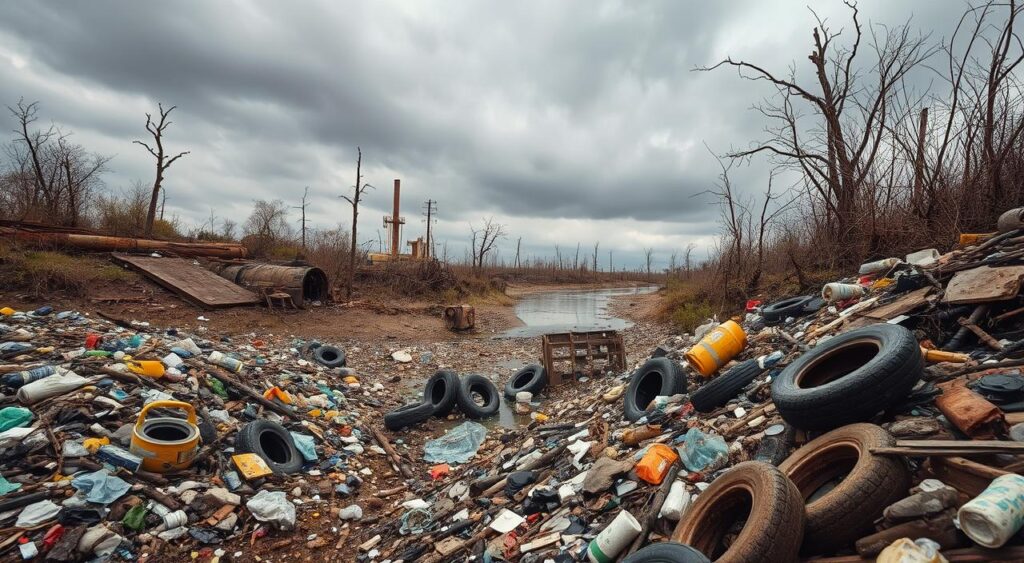
The financial toll of this problem is severe for local councils. Cleanup operations cost municipalities an average of $600 per tonne. This massive expenditure diverts funds from other vital community services, magnifying the impact beyond mere eyesores.
This issue of unauthorised dumping is multifaceted. It damages local ecosystems, poses risks to public safety, and degrades community wellbeing. Understanding the full scope of this crisis is the first step towards effective solutions and a cleaner future for all.
Key Takeaways
- Globally, one-third of all waste is not managed in an environmentally sound way.
- Major cities like Los Angeles and Philadelphia collect thousands of tonnes of illegally dumped rubbish annually.
- Municipal cleanup costs are substantial, averaging around $600 per tonne.
- The issue extends beyond aesthetics, affecting ecosystem health and public safety.
- Unauthorised waste disposal represents a significant financial drain on local authority budgets.
- Comprehending the scale of the problem is crucial for developing effective countermeasures.
Introduction to the Issue of Illegal Dumping
Fly-tipping, a term familiar across the UK, describes the unauthorised abandonment of waste. This practice is also called promiscuous dumping in some regions. It involves discarding, littering, or burning materials in any place not approved for disposal.
The scale of this issue is vast. Every day in the United States, over two tons of material are left on streets and waterways. Globally, a staggering 100 million tons of trash is discarded this way each year. These figures do not even include common items like cigarette butts.
This is a worldwide environmental crisis. It happens when individuals or businesses leave rubbish in places like vacant lots, roadways, and private property without permission. These areas become blighted and dangerous.
| Common Dumping Location | Typical Waste Types | Primary Risks |
|---|---|---|
| Roadside Verges | Household rubbish, construction debris | Traffic hazards, visual blight |
| Waterways & Woodlands | Tyres, appliances, chemical containers | Pollution, harm to wildlife |
| Vacant Urban Lots | Domestic refuse, bulky items | Public health hazards, rodent attraction |
This activity represents a failure of proper waste management. It is far from a victimless crime. The disposal of trash in unauthorised areas scars the environment and can force people to move. It also creates a heavy financial burden for local councils who must pay for clean-up.
What is Illegal Dumping?
A clear distinction exists between legal rubbish handling and the unlawful abandonment of discarded materials. Unauthorised disposal, commonly known as fly-tipping, involves leaving refuse in any place not designated for rubbish management.
This activity typically involves significant quantities. A site is often classified as such when deposits exceed 15 pounds in weight or 27 cubic feet in volume. This separates it from minor littering.
Common locations for these deposits include roadside verges, vacant urban lots, waterways, woodlands, and even other people’s skips or private land. The key factor is the lack of permission from the landowner or relevant authority.
Proper waste management means taking your rubbish to approved facilities. These include council-run tips, licensed landfills, recycling centres, and transfer stations. Following safety rules for handling materials is a crucial part of the process.
Several criteria determine whether an act is legal disposal or an offence:
| Criteria | Legal Disposal | Unauthorised Disposal |
|---|---|---|
| Location | Approved facility (landfill, etc.) | Any undesignated area |
| Authorisation | Permission granted | No permission |
| Material Type | Accepted items | May include hazardous items |
| Method | Safe handling procedures | Improper, often reckless abandonment |
| Compliance | Follows all regulations | Violates laws and permits |
Understanding these differences helps communities identify problems. It also underscores why using official channels is vital for protecting our environment and public health.
Understanding illegal dumping impact
The decision to discard materials unlawfully is rarely random. It is influenced by a combination of practical and economic pressures. Experts point to a shortage of accessible and affordable legal disposal options as the primary cause.
Environmental advocate Sara Popescu Slavikova notes that systems must be simple for the public. High fees discourage proper conduct. When official routes are inconvenient, people seek alternatives.
Key Factors Affecting the Environment
Economic factors are a major driver. Businesses may avoid proper fees. Unlicensed contractors often abandon demolition rubble instead of paying for disposal.
Another critical issue is inadequate enforcement. Minimal monitoring and weak penalties offer little deterrent. Fines must be significant to change behaviour.
Notable Statistics from Recent Studies
Recent data shows the scale of the issue. Los Angeles cleared 15,825 tonnes in 2019. Philadelphia removed over 8,000 tonnes in 2022.
In 2024, 2,300 pounds were illegally dumped at Taber State Forest. A clear national record in the US does not exist. This data gap allows the problem to grow unchecked.
| Factor | Description | Environmental Consequence |
|---|---|---|
| Type of Waste | Household rubbish vs. hazardous chemicals | Varies from nuisance to severe toxicity |
| Location | Near waterways, ecosystems, or residential areas | Direct pollution of soil and water sources |
| Volume | Small bags to large lorry loads | Greater strain on local environment |
| Duration Before Cleanup | Time waste remains on site | Longer exposure increases harm |
Combating this issue needs a multifaceted approach. Solutions must address disposal access, strong enforcement, and public awareness.
Environmental Damage and Ecosystem Disruption
Unregulated dump sites create lasting harm to the land and its waterways. Unlike official landfills with protective liners and monitoring, these places have no safeguards.
Soil and Water Contamination
When rubbish degrades in the open, it releases chemicals and toxins. These substances leach into the soil, often making it infertile.
Runoff from sites carries hazardous waste directly into streams and rivers. This pollutes drinking water sources and aquatic habitats.
Contaminants can encourage invasive plant species. They may also enter the food chain through vegetation.
Wildlife Disruption and Natural Hazards
Animals are immediate victims. Smaller creatures eat plastic or get tangled in debris. Fish suffer from depleted oxygen in polluted waterways.
Abandoned waste increases the risk of fire. Flammable materials can mix and release combustible gases.
Blocked drains and natural channels can cause flooding. Trash also attracts pests like rats and mosquitoes, disrupting local ecology.
| Type of Harm | Primary Cause | Resulting Damage |
|---|---|---|
| Soil Poisoning | Chemical leaching from waste | Infertile ground, toxic food crops |
| Water Pollution | Runoff into streams and rivers | Contaminated drinking water, dead fish |
| Wildlife Injury | Ingestion or entanglement in trash | Sick animals, disrupted food chains |
| Fire Hazard | Accumulation of flammable materials | Spontaneous blazes, forest fires |
| Flood Risk | Blockage of natural water flow | Localised flooding, accelerated erosion |
This multifaceted damage underscores the severe ecological toll of unauthorised disposal.
Public Health and Community Safety Concerns
Abandoned waste piles are more than an eyesore; they are a breeding ground for public health crises. When materials are discarded in unauthorised locations, they create direct and severe threats to the wellbeing of nearby residents.
This dumped waste attracts pests like rats and mosquitoes. These animals can carry serious diseases, creating a direct pathway for infection to spread through a community.
Health Risks from Hazardous Waste
The problem intensifies with hazardous waste. Chemicals from old batteries, paints, and solvents leak into the environment.
Exposure to these pollutants can cause immediate health problems. Respiratory issues, persistent headaches, and skin irritations are common.
Children and elderly people are especially vulnerable. Their immune systems are less equipped to handle these toxins.
Authorities treat this issue with great seriousness. Fines for hazardous waste dumping can reach £10,000, reflecting the grave risk.
Living near a fly-tip site affects more than community spaces. It is a genuine public health emergency that demands urgent action.
Economic and Social Consequences
Neighbourhoods blighted by discarded rubbish face a dual crisis of falling property prices and strained public resources. The effects of unauthorised disposal extend well beyond environmental harm, creating lasting damage to local economies and community cohesion.
Impact on Property Values and Municipal Budgets
When fly-tipping occurs nearby, property values typically decrease. Potential buyers and renters are deterred by the visible waste, making sales difficult. Whole areas become undervalued and overlooked for development funding.
This creates a vicious cycle of disinvestment. The financial burden then falls on taxpayers. For example, Kansas city budgets $2 million annually for cleanup, while Seattle spent $1.9 million in 2022.

Social Wellbeing and Quality of Life Issues
Residents in affected areas often experience reduced community pride. They may care less about their town’s appearance. This discouragement can spread, lowering overall quality of life.
Public spaces like parks and playgrounds become unusable when contaminated. This deprives people of essential resources for physical and mental wellbeing. In addition, tourist destinations suffer revenue loss, harming local businesses and jobs.
| Economic Consequences | Social Consequences |
|---|---|
| Decreased property values | Reduced community pride |
| High municipal cleanup costs | Loss of usable public spaces |
| Damage to local tourism revenue | Lower overall quality of life |
| Business closures and job losses | Increased social disconnection |
These interconnected issues show why preventing unauthorised waste disposal is crucial for healthy, thriving communities.
Legal Framework and Enforcement Measures
Authorities employ a multi-layered system of regulations and penalties to deter and punish those who discard waste improperly. This framework operates from the local council level up to international agreements.
Local, National and International Regulations
Numerous laws prohibit unauthorised disposal in public spaces. In the United States, the federal Clean Water Act is a key statute.
For example, the city of Los Angeles must operate its stormwater system under a National Pollutant Discharge Elimination System permit. This is required by the Clean Water Act.
Role of Surveillance and Enforcement Strategies
Enforcement strategies include criminal citations and administrative fines. For egregious violations, prosecutors can pursue felony cases.
Penalties vary by severity. Infractions often bring fines of £200 to £250. Misdemeanours can result in fines up to £1,000 and six months in jail.
Commercial-scale dumping or discarding hazardous waste carries much harsher penalties. Fines can reach £10,000 in these serious cases.
Surveillance cameras are a cost-effective enforcement tool. They collect evidence for prosecutions and deter potential offenders.
| Violation Type | Typical Fine | Possible Imprisonment | Notes |
|---|---|---|---|
| Infraction (First Offence) | Up to £200 | None | Prosecuted under municipal code |
| Infraction (Repeat) | Up to £250 | None | Fines increase with subsequent violations |
| Misdemeanour | Up to £1,000 | Up to 6 months | For more serious unlawful disposal |
| Commercial/Hazardous Waste | Up to £10,000 | Possible | Applies to businesses and dangerous materials |
Coordination between environmental units, police, and other agencies is essential for effective deterrence of this harmful activity.
Reporting and Preventing Illegal Dumping
Taking action against fly-tipping starts with understanding the correct channels for reporting and implementing simple preventative steps. Everyone can contribute to stopping this harmful practice.
How to Report Illicit Dump Sites
If you discover a dump site or witness the act, contact your local council. There is no single national system for reporting illegal dumping.
Responsibility usually lies with your local solid waste department or police. Check your council’s website for specific contact information.
When you report, provide key details. Note the date, time, and exact location. Photographs of the waste or vehicles involved are very helpful for authorities.
If you see someone actively dumping, call the police immediately. Do not confront the individuals yourself, as this could be unsafe.
Preventative Measures for Residents and Businesses
Property owners can take practical steps to deter unauthorised disposal. Start by posting clear “No Trespassing” and “No Dumping” signs in vulnerable areas.
Identify spots on your land where rubbish could be left unnoticed. These are often heavily wooded locations, blind spots behind structures, or spaces with detached buildings.
If signage alone is not effective, consider installing a video monitoring system. Cameras act as a strong visual deterrent and can provide crucial evidence.
Businesses should secure their waste disposal areas. Keep skips and dumpsters locked when not in use. Ensure premises are well-lit to discourage unauthorised access after hours.
Strategies for Personal and Community Action
Community-led initiatives transform the fight against unauthorised waste disposal from a council issue into a shared responsibility. Meaningful change starts when individuals and groups decide to act together.
Community Empowerment and Local Initiatives
Raising awareness is the first crucial step. As expert Sara Popescu Slavikova notes, people need to understand why this is a negative thing.
They must see how it affects them personally. The problem has to be explained in a way that makes them feel involved.
One powerful way to engage is by contacting a nonprofit that organises cleanups near you. Many of these organisations work with local governments.
They coordinate beautification efforts in affected areas. They can provide the information you need to get started.
Local initiatives take many forms. They combine prevention, detection, and clean-up actions for the best results.
| Initiative Type | Primary Focus | Example Activities |
|---|---|---|
| Neighbourhood Watch | Detection & Reporting | Monitoring local spaces, reporting fly-tips |
| Community Cleanup Days | Remediation | Organised litter picks, beautification projects |
| Education Campaigns | Prevention | Workshops, school programmes on proper disposal |
| Advocacy Groups | Systemic Change | Lobbying for better waste services and enforcement |
Sustained action needs strong partnerships. Residents, businesses, organisations, and councils must work together.
This coordinated approach builds a sense of agency. It turns people from passive victims into active problem-solvers.
Effective Waste Disposal and Recycling Practices
Every household and business has a responsibility to handle their waste through approved channels. Proper waste disposal is the foundation for preventing environmental harm and keeping communities clean.
Following Approved Disposal Methods
Legal disposal means taking your trash to council-operated tips, licensed landfills, recycling centres, or transfer stations. You must follow safety rules for handling different materials.
Waste segregation is crucial. Separate paper, glass, and metals from general trash. Keep hazardous items like batteries and paints apart. This ensures each stream gets the right treatment.
Many items have special programmes. Appliances, tyres, and electronics can go to designated drop-off points. This makes unauthorised dumping unnecessary.
Education and outreach gradually change behaviour. Community events and clear signage help people do the right way. More bins in public spaces reduce excuses for littering.
| Material Type | Approved Disposal Method | Key Notes |
|---|---|---|
| Paper & Cardboard | Recycling Bin / Centre | Keep dry and clean |
| Glass & Metals | Recycling Bin / Centre | Rinse containers |
| General Household Waste | Council Bin / Landfill | Bag securely |
| Hazardous (paint, chemicals) | Special Household Waste Centre | Never mix with regular trash |
| Bulky Items (furniture) | Booked Council Collection | Often a free service |
Check your local council website for collection schedules. Use bulky waste services and free recycling programmes. Plan ahead for large projects to avoid illegal actions.
Businesses must arrange commercial waste disposal services. Keep on-site storage secure and train staff in proper procedures.
Using approved methods is legally required. It is also environmentally responsible and more cost-effective than risking fines.
Innovative Surveillance and Monitoring Solutions
Surveillance cameras have become a critical tool in the fight against fly-tipping. They provide a modern, cost-effective way to monitor vulnerable areas without constant human patrols.
Utilising Camera Surveillance Systems
These systems serve multiple functions. They act as a visible deterrent, discouraging offenders from targeting a site. They also collect video evidence for prosecutions.
Camera deployment varies widely between cities. Los Angeles has only 19 units across its vast road network. Philadelphia uses over 100 cameras for a smaller area.
Technological Advances in Enforcement
Modern units feature high-resolution recording and night vision. Motion-activated alerts and remote monitoring improve efficiency. Mobile security trailers offer great flexibility.
In Camden, New Jersey, mobile units with cameras stopped unauthorised dumping entirely. The Public Works director called the programme “100% working.”
| City | Roadway Miles Managed | Cameras Deployed | Key Information |
|---|---|---|---|
| Los Angeles | ~6,500 | 19 | Limited coverage across 470 square miles |
| Philadelphia | ~2,200 | 100+ | Higher density of surveillance |
| Phoenix | ~4,900 | 26 | Moderate deployment for large area |
| Camden, NJ | N/A | Mobile Units | Reported 100% success at problem sites |
This technology represents a smart investment. It saves money on clean-up and enforcement in the long term. Privacy is respected by focusing on public spaces where offences occur.
Organising Successful Community Cleanups
A successful cleanup event does more than remove rubbish. It rebuilds community spirit and deters future offences. Turning a neglected area into a source of local pride requires careful planning and strong partnerships.
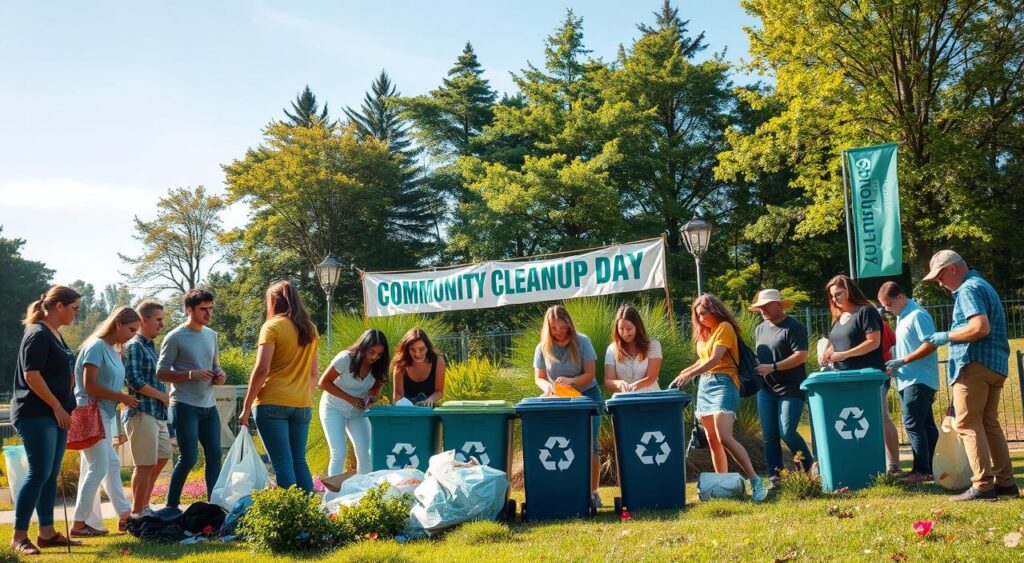
Education and Outreach Programmes
Changing attitudes is key to lasting change. Workshops and social media campaigns explain why proper disposal matters.
These programmes show how fly-tipping harms local spaces. They provide clear guidance on recycling and safe waste handling. This knowledge empowers people to make better choices.
Partnering with Local Organisations
Nonprofit environmental groups are vital allies. They often work with councils and have expertise in coordinating volunteers.
These organisations can help assess problem sites and arrange for proper disposal. Some waste management firms even offer dumpster donations for community projects. This support reduces costs and ensures collected garbage is handled correctly.
Effective cleanups need good equipment and safety briefings. Documenting the effort with photos and data helps advocate for cleaner neighbourhoods. This turns a one-day event into a catalyst for ongoing care.
Conclusion
While the challenge of unauthorised waste disposal is significant, progress is achievable through concerted action. The problem causes extensive damage to ecosystems and public health. It also strains local economies and degrades shared spaces.
Eliminating this issue entirely is a long-term goal. However, every small action contributes to the solution. Reporting an illegal dump site or volunteering for a cleanup are valuable steps.
Responsible management of household and business waste is fundamental. Using approved facilities ensures hazardous waste is handled safely. This protects our land and water from contamination.
A comprehensive approach combining enforcement, education, and community engagement is essential. Your participation matters. Making an effort is half the battle in restoring our environment’s quality.