Modern rubbish and recycling systems rely on a network of specialised hubs. These facilities are the unsung heroes of our daily refuse collection. They act as a crucial consolidation point for materials gathered from homes and businesses.
At these centres, loads are sorted and compacted. This streamlines the entire management process. It makes the onward journey to processing plants or recovery sites far more efficient.
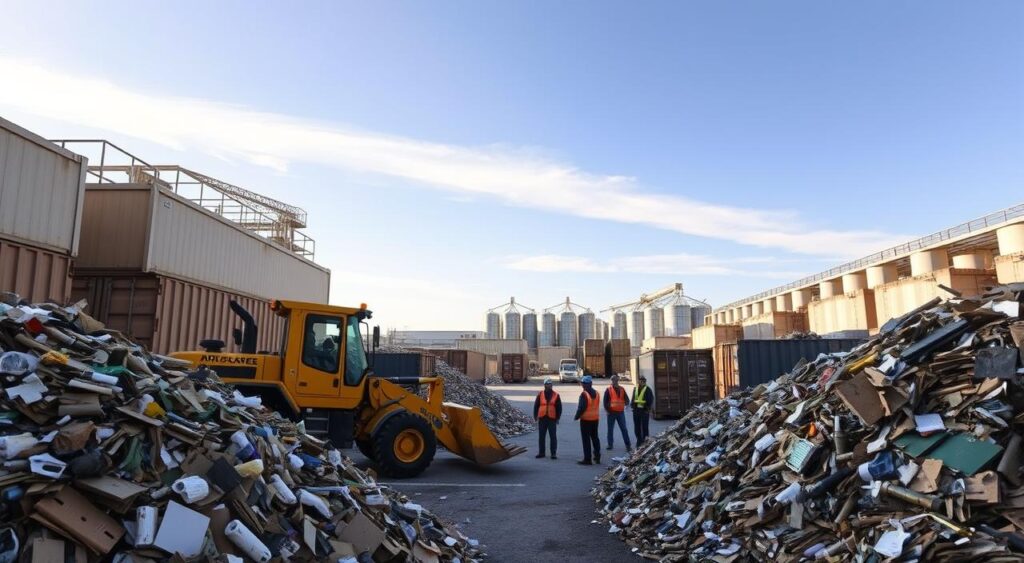
This logistical step brings major environmental benefits. It cuts the number of heavy goods vehicles on our roads. This directly lowers fuel use and air pollution across the United Kingdom.
For local authorities and private companies, using these services is key. It helps them meet strict environmental laws and boost their recycling rates. A good example is SL Recycling, which operates a major facility in Ystrad Mynach.
Key Takeaways
- These hubs form the backbone of contemporary waste management systems.
- They consolidate materials for efficient transport to final processing sites.
- Their operation significantly reduces lorry traffic and associated carbon emissions.
- Using professional services ensures compliance with environmental regulations.
- Improved sorting at these facilities leads to higher material recovery rates.
- They provide a vital service for both local councils and commercial organisations.
Introduction to Waste Transfer Stations
The sheer volume of refuse generated daily demands a sophisticated and organised approach to handling it. Effective systems are needed to manage this flow with minimal harm to our surroundings.
These systems rely on specialised intermediate facilities. Their job is to sort, compact, and prepare loads for the next stage.
Overview of Waste Management
Modern refuse handling is a complex logistical operation. It involves collection, sorting, and final processing of discarded items.
The goal is to maximise material recovery and minimise what ends up in landfill. This systematic process protects our air and land from pollution.
Importance in the Circular Economy
These hubs are vital for shifting from a disposable model to a circular one. They enable the separation of valuable resources from mixed rubbish streams.
By creating clean material flows, they feed resources back into manufacturing. This reduces the need for new raw materials and supports long-term ecological balance.
What is a Waste Transfer Station?
Unlike a final landfill site, a transfer station is a dynamic centre where materials are prepared for further processing. It is a specialised industrial facility designed to receive, sort, and consolidate refuse before transport.
Definition and Key Elements
This type of facility acts as a crucial sorting hub for commercial and construction rubbish. Its primary goal is to divert material from landfill, boosting regional recovery rates.
Key elements include a large tipping hall, weighbridges for data, and dedicated bays. These bays hold segregated materials like wood, metal, and plastic for processing.
Differences from Landfill and Recycling Centres
A landfill is the final resting place for non-recyclable items. In contrast, a transfer station is an intermediate step focused on resource recovery.
Household recycling centres are intended for public use. Professional transfer stations serve licensed carriers and commercial operators only.
| Feature | Transfer Station | Landfill Site | Household Recycling Centre |
|---|---|---|---|
| Primary Function | Sorting & consolidation | Final disposal | Public recycling drop-off |
| User Access | Licensed commercial operators | Authorised vehicles only | General public |
| Material Outcome | High-value streams for recovery | Buried waste | Sorted recyclables |
| Environmental Focus | Diverting from landfill | Contained burial | Community recycling |
The Process at a Waste Transfer Station
From the moment a lorry enters the gate, a systematic procedure transforms mixed loads into sorted streams. This operation is designed for maximum efficiency and material recovery.
Every vehicle is weighed upon arrival. This step provides crucial data for legal documentation and tracks the facility’s intake.
Arrival, Weighing and Data Recording
Drivers must use the weighbridge first. Recording the load’s weight is a legal duty for all commercial operations. This data forms the basis for the required Waste Transfer Notes.
Tipping, Sorting and Reloading Procedures
After weighing, the lorry moves to the tipping hall. Operatives and machinery like excavators remove bulky items. The remaining material then moves onto conveyor belts for detailed sorting.
Magnets pull out ferrous metal. Manual pickers remove other recyclables. Hazardous items are identified and isolated for safe handling. Finally, non-recyclable residue is compacted into containers for transport.
| Process Stage | Key Actions | Outcome |
|---|---|---|
| Arrival & Weighing | Vehicle passes over weighbridge; weight recorded. | Legal data captured; audit trail begun. |
| Tipping & Initial Sort | Load tipped in hall; bulky items removed by machine. | Large contaminants removed; material prepared for line. |
| Main Sorting Line | Conveyors, magnets, and manual picking separate materials. | Clean streams of recyclables like metal and plastic. |
| Final Preparation | Remaining waste compacted or baled. | Dense, efficient loads for onward transport or recovery. |
Full documentation ensures compliance. The original mixed delivery leaves as several distinct, valuable material streams.
Key Equipment and Technologies in Use
Specialised equipment working in harmony enables efficient separation and recovery of materials. These technological solutions are fundamental to modern processing operations.
Machinery and Screening Systems
Initial sorting relies on robust screening systems. Trommels and vibrating screens separate soil and rubble from lighter materials.
Powerful overhead magnets then extract ferrous metals from conveyor lines. In the tipping hall, 360-degree excavators handle large, mixed loads with precision.
Innovative Solutions for Streamlined Operations
Further along the line, industrial balers compress cardboard and plastic into dense cubes. This significantly reduces storage and transport requirements.
Shredders process bulky timber into uniform woodchips for biomass fuel. Digital tracking systems monitor material flow in real-time, providing valuable operational data.
| Equipment Type | Primary Function | Key Benefit |
|---|---|---|
| Trommel Screens | Separate soil/rubble from lighter materials | Initial material stream purification |
| Overhead Magnets | Extract ferrous metals | High-value metal recovery |
| Industrial Balers | Compress cardboard & plastic | Reduced volume for transport |
| Digital Tracking Systems | Monitor material flow in real-time | Data-driven operational improvements |
Advanced dust extraction systems maintain air quality. Together, these technologies enable facilities to achieve higher recovery rates and provide cost-effective services.
How a Waste Transfer Station UK Operates
The operational model of a modern material consolidation hub is built on three core pillars: consolidation, safety, and environmental stewardship. This framework ensures a smooth, responsible process from receipt to dispatch.
Consolidation of Mixed Waste Streams
The primary logistical function is merging loads from many small collection vehicles. These are compacted into fewer, larger containers for efficient long-distance transport.
This strategy drastically cuts total vehicle movements on public roads. It is a fundamental step for cost-effective and sustainable material management.
Safety, Efficiency and Environmental Considerations
Strict safety protocols govern every activity. Designated pedestrian walkways and clear traffic management systems prevent accidents in the busy tipping hall.
Operational efficiency is measured by the landfill diversion rate. Regular equipment maintenance is essential to sustain high processing volumes and meet this key performance indicator.
Environmental protection is paramount. Facilities are engineered to contain noise, dust, and odours. Identifying and removing hazardous items during sorting prevents pollution at final processing sites.
| Operational Pillar | Key Focus | Primary Benefit |
|---|---|---|
| Consolidation | Merging loads for efficient transport | Reduces road traffic and fuel use |
| Safety | Protecting personnel and managing site traffic | Prevents accidents and ensures smooth workflow |
| Environmental | Containing emissions and pre-sorting hazardous materials | Minimises local impact and protects final disposal sites |
Environmental and Economic Benefits
Consolidating refuse streams offers dual advantages for both ecological health and economic performance. These material hubs are pivotal in creating a more sustainable and financially viable system for handling our resources.
Reduced Road Travel and Lower Emissions
By merging loads from many collection vehicles, these facilities drastically cut total lorry mileage. This directly lowers diesel consumption and associated carbon emissions.
Fewer heavy goods vehicles on the road also ease traffic congestion. This leads to cleaner air in both urban and rural areas across the country.
Cost Efficiency and Improved Recycling Rates
Transport costs are often calculated per tonne-mile. Consolidation is therefore a highly cost-effective strategy for operators.
Meticulous sorting recovers valuable materials like aluminium and copper. This boosts overall recycling rates and generates revenue.
Diverting material from landfill also helps mitigate the financial burden of the UK Landfill Tax. This protects natural resources and reduces long-term environmental liability.
| Benefit Type | Primary Action | Key Outcome |
|---|---|---|
| Environmental | Consolidating transport journeys | Lower fuel use and reduced air pollution |
| Economic | Optimising load efficiency | Lower per-tonne transport costs for businesses |
| Environmental | Advanced material separation | Higher recovery of metals and other recyclables |
| Economic | Landfill diversion | Significant savings on rising landfill tax charges |
The operational efficiency gained allows management companies to offer more competitive pricing. The overall impact benefits both the planet and commercial bottom lines.
Contribution to the Circular Economy
The concept of a circular economy hinges on our ability to recover value from what is often discarded. Specialised sorting hubs are fundamental to this shift. They intercept material streams before final disposal.
Resource Recovery and Material Reuse
These facilities separate cardboard, plastics, and metals from mixed loads. This creates clean, high-quality secondary raw materials. These resources are fed back into manufacturing supply chains.
This process reduces the need for virgin raw materials. It turns a disposal problem into a valuable resource opportunity. The global market for recycled content continues to grow.
Impact on Waste Diversion from Landfill
The systematic approach has produced measurable results. UK municipal rubbish sent to landfill fell sharply. It dropped from 13,973 thousand tonnes in 2021 to 11,184 thousand tonnes in 2023.
This diversion helps meet carbon reduction goals. It also represents significant financial savings by avoiding landfill tax charges.
| Aspect | Linear Economy Model | Circular Economy Contribution |
|---|---|---|
| Material Flow | Extract, Use, Dispose | Recover, Process, Reuse |
| Primary Destination | Landfill Site | Recovery & Reprocessing Facilities |
| Economic Driver | Cost of Disposal | Value of Recovered Resources |
| Environmental Focus | Containment of Pollution | Systemic Resource Efficiency |
Public and Commercial Waste Management
For a town or city to manage its commercial refuse effectively, it requires dedicated local facilities that serve businesses and licensed carriers. These hubs are vital for keeping the area tidy and ensuring all rubbish is handled correctly.
How Local Waste Facilities Benefit Communities
A professional disposal point deters illegal dumping. By providing a legal and convenient option, these centres help keep streets and countryside clean.
They offer a reliable service for the entire community. This commitment to local environmental quality is a key part of modern rubbish management.
Opportunities for Small Businesses and Licensed Carriers
For tradespeople and companies, a local site is incredibly convenient. Staff can offer expert advice on segregating loads, which often reduces disposal costs. Quick turnaround times keep operations running smoothly.
Licensed carriers rely on this efficiency to meet their clients’ strict schedules. Knowing materials will be sorted for recovery encourages more firms to adopt green practices. It’s always wise to check a facility’s website first to confirm what they accept.
Compliance with UK Environmental Regulations
Every load processed at a professional sorting hub is governed by a legal chain of responsibility. Operating these facilities requires strict adherence to a complex framework designed to protect our surroundings.
The system ensures all parties involved in material handling are accountable for their actions.
Legal Duty of Care and Waste Transfer Notes
All operators have a legal Duty of Care for the rubbish they handle. This duty lasts from the point of collection until its final recovery or disposal.
A Waste Transfer Note is a mandatory document for every single load. It provides a clear audit trail, proving the material was taken to an authorised site.
This documentation is a critical part of the management system. It holds everyone accountable and is essential for proving compliance.
Meeting Pollution Inventory Reporting Requirements
Larger facilities often need a permit from the Environment Agency. Those classified as Part A1 installations have extra reporting duties.
They must submit detailed data for the national pollution inventory. Regular monitoring of emissions to air and water is also required.
Specific protocols exist for hazardous material. These prevent contamination of the site and protect local water systems.
| Regulatory Requirement | Primary Purpose | Consequence of Non-Compliance |
|---|---|---|
| Duty of Care & Waste Transfer Notes | Create a full audit trail for every load | Legal action and financial penalties |
| Part A1 Permit & Pollution Reporting | Monitor and control environmental emissions | Enforcement notices and permit revocation |
| Hazardous Material Protocols | Prevent site contamination and pollution | Significant fines and operational shutdown |
Following these rules is essential for a facility to operate within its permit terms. Failure to comply risks large fines and the loss of its operating licence.
Handling Hazardous Waste Safely
Identifying and isolating dangerous materials requires rigorous procedures and expert knowledge. At any professional processing facility, this task is paramount to protect people and the surroundings.
Screening for Hazardous Materials
Initial checks involve trained staff and specialised equipment. Visual inspection and sometimes chemical testing help classify items correctly.
Any substance deemed hazardous is segregated immediately. It is placed into secure, labelled containers to prevent leaks or reactions.
Strict protocols ensure these materials do not mix with general rubbish streams. This prevents contamination of the site’s drainage and air systems.
Operatives receive regular training and personal protective equipment. This aligns with health and safety laws to manage risks effectively.
The rigorous screening process safeguards employees, the public, and the local environment. All movements are tracked with specific documents.
This ensures each load reaches a licensed treatment or disposal site. Such high standards demonstrate the professionalism of modern material recovery hubs.
Technological Advances and Future Trends
The industry’s evolution is being shaped by a surge in technological innovation, driven by a market now valued at over USD 40 billion. This investment is creating more intelligent and responsive material handling facilities.
Automation and Digital Tracking Systems
Artificial intelligence and robotics are revolutionising sorting lines. These systems identify and separate materials with incredible speed and accuracy.
Digital tracking provides real-time data on volume and composition. This allows operators to optimise logistics and significantly reduce their carbon footprint.
Improvements in Emission Control and Data Reporting
New technologies are also enhancing air quality management. Advanced scrubbing and filtration systems handle complex material streams more effectively.
Sophisticated data reporting tools simplify the compliance process. They make it easier for operators to meet their obligations to the Environment Agency.
The future lies in integrating these technologies into smart, connected facilities. This focus on maximising recovery and minimising landfill is essential for meeting growing demand for professional services.
Tips for Choosing the Right Waste Transfer Station
Selecting the correct facility for your rubbish is a critical business decision. It impacts both your budget and environmental compliance.
A careful evaluation ensures your materials are handled responsibly. It also guarantees you meet all legal duties of care.
Key Factors and Service Evaluations
First, always verify the site holds a valid environmental permit. Check they are authorised to handle your specific types of material.
Consider the location of the facility. A provider closer to your project can slash transport costs and fuel use.
Review their website for practical details. Look for opening hours, accepted waste streams, and any booking requirements.
Comparing Facilities and Cost Considerations
Ask for a clear breakdown of all gate fees. Inquire about extra charges for sorting hazardous or bulky items.
Look for a provider offering transparent data reporting. This makes maintaining your own compliance records much simpler.
Compare multiple facilities to ensure you get the best value. Evaluate their customer service and ability to deliver reliable, timely solutions.
Your due diligence should focus on:
- The facility’s proven recycling rates and commitment to sustainable disposal.
- The clarity of their pricing and additional service charges.
- The quality of their customer support and operational reliability.
Conclusion
The journey of our discarded items is far from over once the collection lorry drives away. Specialised facilities form the critical, unseen link in modern rubbish management systems.
Their core function is to divert vast quantities of material from landfill. Through meticulous sorting, they enable high-quality recycling and resource recovery.
This process is fundamental to building a more circular economy. Choosing a professional provider ensures your material is handled legally and with minimal environmental impact.
As technology advances, these hubs will become even more efficient at extracting value. Understanding their role is the first step towards better disposal practices.
Collective use of these expert services is key to meeting the country’s ambitious ecological goals. It turns a logistical challenge into a genuine opportunity for progress.