Once your bin is emptied, the contents embark on a complex and carefully managed journey. This process is far more than simple disposal. It is the first step in recovering valuable resources for our communities and the environment.
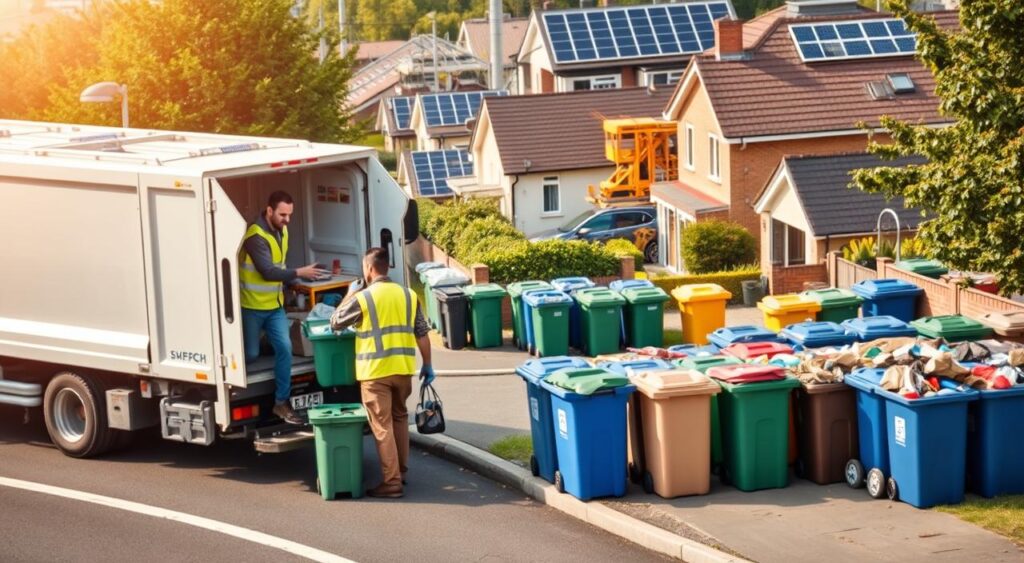
Our operations handle an immense volume of material. We manage over 3.5 million tonnes every year, a scale that is crucial for supporting the nation’s transition to green energy. This significant capacity allows our business to make a substantial positive impact.
Every household collection is treated with the highest standards of efficiency and environmental care. We prioritise the health, safety, and wellbeing of our dedicated staff members at every single stage. This commitment ensures that our work is not only effective but also responsible.
The ultimate goal is to transform discarded items into future resources. This aligns with our ambitious target to achieve net zero carbon emissions by 2040. Our comprehensive approach turns what was once rubbish into a foundation for a sustainable future.
Key Takeaways
- Our comprehensive approach ensures household materials are handled with high efficiency and environmental responsibility.
- We manage over 3.5 million tonnes of material annually, a scale that supports the green energy transition.
- Each collection is the first step in a sophisticated journey that transforms rubbish into valuable future resources.
- Health, safety, and staff wellbeing are prioritised throughout all our operations.
- We are committed to achieving net zero carbon emissions by the year 2040.
Understanding Household Waste Management
Every item placed in a bin is part of a larger system designed for recovery, not just removal. Effective management requires a deep understanding of how different materials flow from the kerbside to our advanced centres.
Our teams collaborate closely with each business client. This partnership ensures the collection process is perfectly tailored to specific volume requirements and daily operational needs.
We provide a reliable service that simplifies a complex task. Our approach sorts household materials into distinct streams for further recovery and treatment.
By streamlining this initial phase, we help our partners achieve a significant goal. They can reduce their overall environmental footprint while we maintain our high standards of service.
Our experts continually refine these handling methods. The focus is on ensuring every tonne of material collected is diverted from landfill whenever possible.
The Journey of Waste: From Collection to Processing
Our regional processing hubs play a critical role in converting discarded items into valuable commodities. These facilities form the essential link between initial gathering and final resource recovery.
Initial Collection and Segregation
Efficient management starts with proper segregation at source. We provide a comprehensive range of containers to suit different needs.
This includes 240L and 360L wheelie bins for commercial clients. The right equipment ensures every business can handle its material disposal effectively from the outset.
Sorting Techniques and Material Recovery
Once collected, items travel to our advanced centres for detailed sorting. Specialist techniques separate different materials to ensure high-quality recovery.
Our flagship Ridham facility in Kent handles over one million tonnes annually. It features bespoke plants for plasterboard and wood processing.
The Thetford site in Norfolk acts as a strategic glass collection hub. It supports a vast network of more than 2,000 glass banks across the region.
By investing in this modern infrastructure, we optimise the entire journey. The goal is maximum resource recovery with minimal environmental impact.
Efficient Waste Processing UK Methods
The transformation of discarded resources begins at state-of-the-art recovery plants. These centres are engineered for high-volume throughput and precise material reclamation.
Advanced Recycling Facilities and Technologies
Our Ridham site houses a sophisticated Materials Recycling Facility (MRF). This plant is designed to maximise recovery rates from complex streams.
It processes a vast volume each year. The technology identifies and extracts valuable commodities efficiently.
We help every business improve its environmental performance. Our methods turn collected items into high-quality secondary raw materials.
This commitment to innovation provides reliable solutions for diverse material streams. The focus is on diverting tonnes from landfill.
| Facility Technology | Primary Function | Estimated Annual Throughput |
|---|---|---|
| Advanced MRF | Maximises material recovery | 1,000,000+ tonnes |
| Plasterboard Processing | Diverts construction material | Significant volume |
| Wood Processing Unit | Produces biomass fuel | High volume |
| Glass Collection Hub | Centralises glass recycling | Supports 2,000+ banks |
Innovative Recycling and Recovery Operations
The evolution of recycling operations focuses on creating a closed-loop system where materials are continually repurposed rather than discarded. This approach maximises resource efficiency and supports sustainable management practices across our facilities.
Extracting Maximum Value from Waste Streams
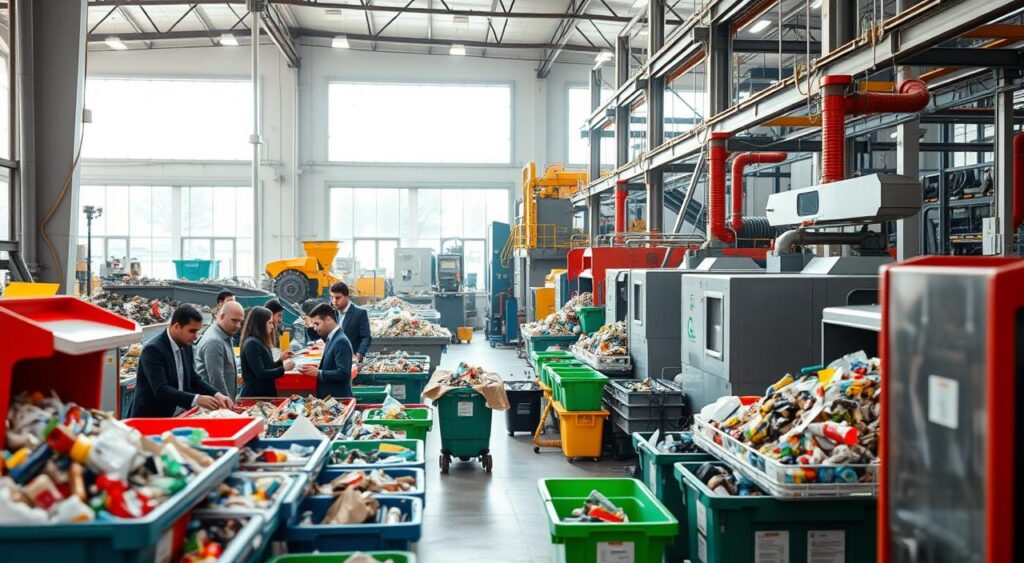
Our dedicated team employs advanced treatment methods to transform collected materials into high-value products. We specialise in producing quality compost and reliable refuse-derived fuel for various applications.
These outputs demonstrate our commitment to extracting maximum value from every stream. The process turns potential waste into useful resources for business and community use.
Emerging Technologies and the Circular Economy
Through ongoing research, we access new technologies for handling difficult-to-recycle items. This innovation supports the transition toward a sustainable circular economy model.
Our technical expertise allows conversion of diverse materials into valuable energy resources. Partnering with specialists ensures effective operations for even the most challenging material streams.
| Product Output | Primary Source Material | End Use Application | Environmental Benefit |
|---|---|---|---|
| Quality Compost | Organic waste streams | Agriculture and landscaping | Reduces landfill use |
| Refuse-Derived Fuel (RDF) | Non-recyclable materials | Energy generation | Alternative to fossil fuels |
| Solid Recovered Fuel (SRF) | Processed commercial waste | Industrial energy source | High calorific value fuel |
| Wood Products | Timber and wood waste | Biomass and construction | Promotes material reuse |
The Role of Waste Facilities and Treatment Sites
Our network of specialised centres provides the essential link between collection and new product creation. These waste facilities are the backbone of our system, transforming collected items into valuable resources.
Locations in Kent and Norfolk exemplify this. These treatment sites are engineered to handle complex material streams. Every stage of the cycle is fully optimised for maximum recovery.
High-performance infrastructure supports regional recycling efforts. It meets local community needs effectively. Our operations focus on recovering high-quality materials.
Recovered resources are reintroduced into the manufacturing supply chain. We continuously monitor all treatment processes. This ensures every site meets the highest environmental and safety standards.
| Facility Site | Core Treatment Function | Key Material Output |
|---|---|---|
| Ridham, Kent | Advanced sorting and recovery | High-grade recyclables, biomass fuel |
| Thetford, Norfolk | Glass collection and processing | Crushed glass cullet |
| Regional MRF | Mixed material separation | Sorted plastics, metals, paper |
| Energy Recovery Facility | Non-recyclable treatment | Sustainable energy |
Sustainable Waste Disposal and Management Solutions
A truly sustainable approach to resource recovery addresses both organic matter and the final fraction of non-recyclable items. Our comprehensive solutions are designed to handle these streams responsibly, completing the material lifecycle.
Composting and Residual Waste Management
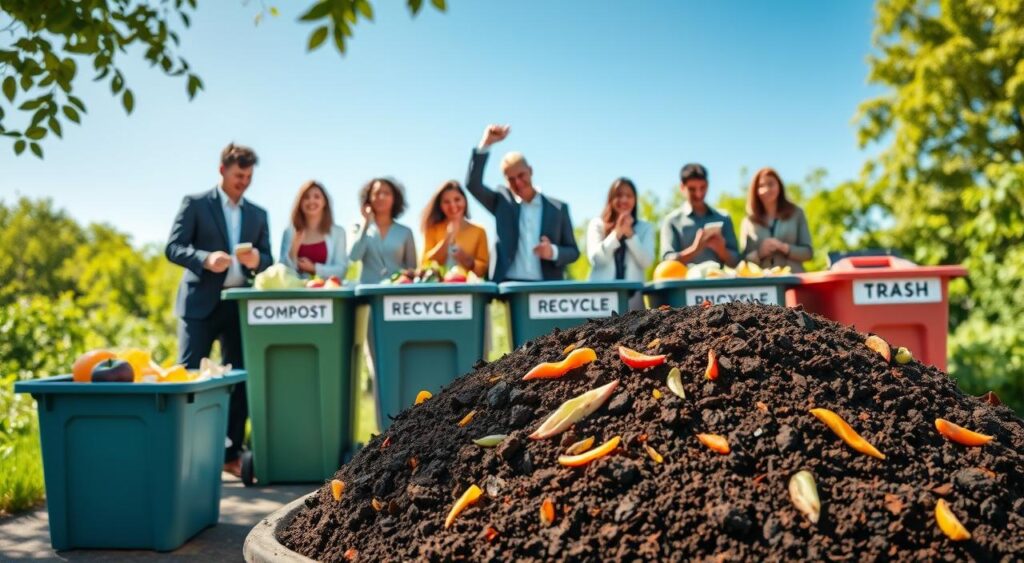
Our dedicated composting service transforms garden and food scraps into high-grade soil improvers. This natural treatment returns valuable nutrients to the earth, supporting local agriculture and landscaping.
For items that cannot be conventionally recycled, our residual waste management provides a secure alternative. We divert this material from landfill, instead converting it into a reliable fuel source for energy generation.
Our expert team begins with a detailed audit for your business. This helps identify savings on disposal costs and landfill tax. We supply a full range of containers, like 6yd, 8yd, and 12yd REL bins, for efficient collection of all wastes.
This tailored service helps customers meet environmental goals and reduce overheads. We provide reliable solutions for every enterprise, from small shops to large industrial sites.
Impact on the Environment and Business Benefits
The modern approach to material recovery creates a powerful synergy between planetary care and corporate prosperity. This dual focus drives our operations and delivers measurable results for our partners and the planet.
Our commitment is clear. We are on track to achieve net zero carbon emissions by 2040 and become climate positive by 2045. This ambitious goal demonstrates a profound commitment to a positive environmental impact.
Green Energy Transition and Cost Efficiency
Handling over 3.5 million tonnes of material annually is a cornerstone of the green energy transition. This scale is vital for the wider circular economy, turning potential waste into renewable power.
Every business can improve its cost efficiency with our innovative solutions. We help reduce reliance on expensive landfill disposal through advanced recovery and treatment methods.
Our focus on sustainable value extraction benefits both customers and the environment. We convert discarded resources into useful commodities and clean energy.
| Benefit Area | Key Action | Business Advantage | Environmental Gain |
|---|---|---|---|
| Carbon Management | Net zero by 2040 target | Future-proofs operations, enhances brand | Direct reduction in greenhouse gases |
| Resource Economy | High-volume material recycling | Cuts raw material procurement costs | Conserves natural resources, reduces waste |
| Operational Efficiency | Tailored collection and treatment | Lowers disposal fees and landfill tax | Diverts material from landfill sites |
| Energy Creation | Conversion to refuse-derived fuel | Provides a stable alternative energy source | Supplies renewable power to the national grid |
This integrated model proves that responsible resource management is a powerful driver for both ecological health and commercial success.
Conclusion
Looking ahead, the focus remains on delivering effective solutions that benefit both commerce and the climate. Our commitment to sustainable material management underpins the circular economy and safeguards our environment.
By harnessing advanced technology and deep expertise, we guarantee each collection is managed with the utmost care and operational precision. This approach maximises resource recovery and minimises environmental impact.
Continuous investment in modern infrastructure and innovative research allows us to anticipate change and adapt our services. We are prepared to meet the future needs of businesses and communities alike.
We extend an invitation to join us as we progress towards our net zero carbon goal and a climate-positive future. Together, we can fundamentally change how society views used materials, turning everyday discards into valuable assets for a greener world.