For any organisation, managing what you throw away is now a critical operational and legal consideration. New government rules are changing how companies handle their discarded materials.
From 2025, the Simpler Recycling legislation mandates that businesses with ten or more staff must separate specific items for collection. This move aims to boost sustainability and reduce what ends up in landfill.
A popular and efficient system is dry mixed waste recycling. This allows your company to place clean, dry materials like paper, cardboard, and plastic together in one bin. It streamlines the process and cuts down on general rubbish.
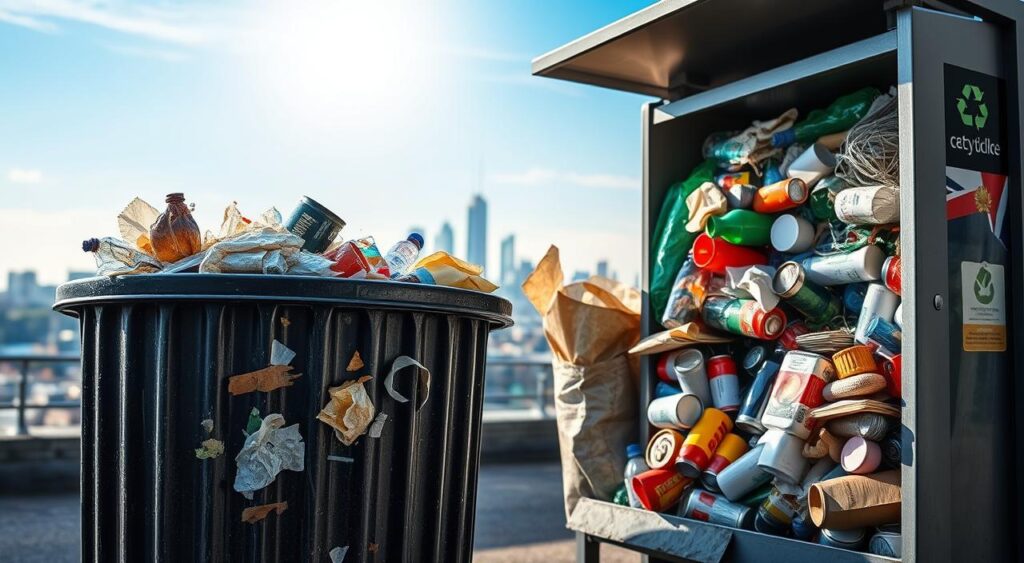
It is crucial to keep food waste completely separate. Placing it with other recyclables contaminates the entire load, making it unrecyclable. This separate stream is a legal requirement under the new rules.
Services like those offered by Recorra in London and Brighton help firms navigate these changes. Using a dedicated dry mixed recycling stream is often far less expensive than disposing of everything as general refuse.
Key Takeaways
- New Simpler Recycling laws from 2025 require businesses with 10+ employees to separate specific materials.
- Dry mixed recycling is a simple system where clean, dry recyclables are collected together in one bin.
- Keeping food waste in its own separate bin is essential to prevent contamination.
- Using efficient recycling streams can significantly reduce costs compared to general waste disposal.
- Professional services are available to help businesses ensure they are fully compliant with legislation.
- Proper separation improves a company’s environmental credibility and supports sustainability goals.
- Understanding your waste streams is the first step towards more responsible and cost-effective management.
Understanding Mixed Waste and Separated Waste
The initial sorting decision by staff dictates the success of the entire recovery chain. Getting it right protects valuable resources and controls costs.
Definition and Importance
Separated streams keep different recyclable materials apart. Clean, dry paper, card, and plastics can often go together. Food and glass need their own containers.
This separation is vital. It keeps materials pure for the sorting process. For example, firms creating over five glass items weekly must have a separate collection.
| Factor | Proper Separation | Contamination Present |
|---|---|---|
| Material Quality | High; items are clean and intact for reprocessing. | Degraded; food residue or liquids ruin paper and cardboard. |
| Processing Cost | Lower; efficient sorting at the recovery facility. | Higher; over 16% of loads are rejected and sent for disposal. |
| Environmental Benefit | Maximised; supports the circular economy and saves energy. | Lost; contaminated loads often cannot be recovered. |
Environmental and Economic Impacts
Advanced facilities like Recorra’s in Purfleet use a nine-stage sorting system. This ensures high-quality output from your recyclables.
Contamination is a major cost. Dirty containers or wet bottles cause entire loads to be rejected. This wastes resources and money.
Correct separation has a direct positive impact. It allows materials to be broken down and made into new products. This saves energy and cuts carbon emissions, boosting your sustainability.
mixed waste vs recycling UK: Challenges and Opportunities
Processing methods for combined and sorted streams differ significantly, impacting both environmental outcomes and the bottom line. Implementing the right system is key to navigating this landscape successfully.
Key Differences in Waste Processing
A contaminated general stream is typically sent for energy recovery or landfill. A clean, separated stream goes to a specialist facility.
Here, advanced technology sorts paper, cardboard, plastics, and metals. High-quality, separated loads are valuable. For instance, firms providing significant volumes of clean cardboard can often secure rebates.
Opportunities for Businesses in the UK
Forward-thinking organisations can turn material handling into an advantage. New laws are a catalyst for positive change.
The 2025 rules mandate correct paper and cardboard handling. From 2027, flexible plastics collection will also be compulsory. Preparing now ensures smooth compliance.
Simple operational shifts yield big results. Creating clear, accessible bin hubs boosts staff participation. Removing under-desk bins centralises collections and drastically improves material quality.
| Opportunity Area | Recommended Action | Key Benefit |
|---|---|---|
| Financial Return | Provide high-volume, clean streams of specific materials like cardboard. | Potential to earn rebates from your service provider. |
| Legislative Preparedness | Audit streams for 2025 (paper/cardboard) and 2027 (flexible plastics) requirements. | Avoids future non-compliance costs and supports corporate sustainability goals. |
| Operational Efficiency | Install centralised bin stations with clear signage and remove individual desk bins. | Increases recycling rates, reduces contamination, and simplifies office cleaning. |
Waste Management Practices and Processing Techniques
Modern facilities employ a sophisticated blend of technology and human oversight to transform discarded items into valuable resources. This ensures high-quality output for the circular economy.
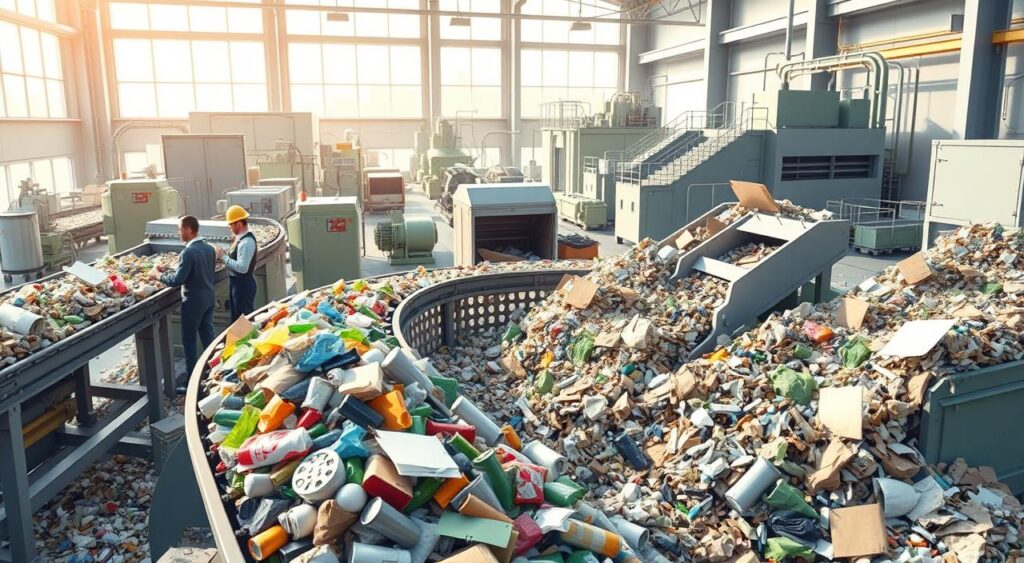
Sorting Processes and Contamination Control
The initial mechanical phase uses advanced optical sorters. These machines identify different types of plastics using light and sensors.
Eddy current separators then create a magnetic field to repel aluminium. This effectively isolates it from other non-ferrous materials.
Human workers perform a critical final check. They manually remove any remaining contaminants that machines might miss.
Innovative Recycling Technologies
Air classifiers separate lightweight materials like paper and plastic films. A strong burst of air blows them into dedicated streams.
Powerful magnets extract ferrous metals such as steel cans during the mechanical phase. This ensures valuable materials are recovered efficiently.
Together, these technologies maximise the purity of sorted streams. They directly support higher recovery rates and better environmental outcomes.
UK Recycling Systems and Regulatory Standards
The landscape of material recovery in the UK is shaped by distinct collection systems, each with its own impact on overall performance. Understanding these methodologies is key for organisations aiming to improve their outcomes and ensure compliance.
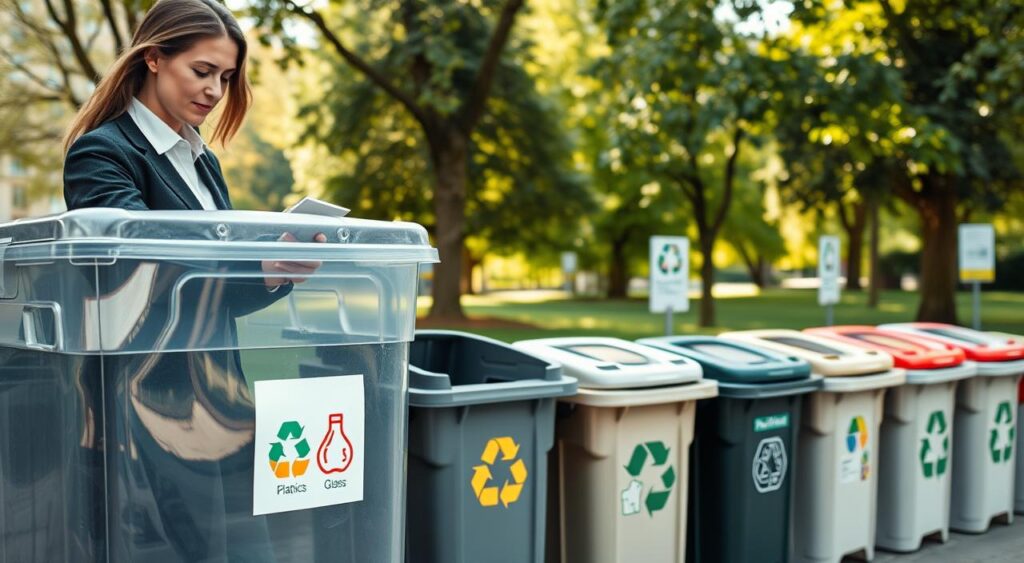
Overview of Comingled, Two-Stream, and Multi-Stream Systems
Comingled systems, where all recyclables are placed together, are the most common. They are used by 46% of local authorities. A further 38% operate two-stream services, typically keeping paper and cardboard separate from containers like plastic and glass.
Multi-stream setups, requiring at least three separate bins, achieve the highest average recovery rates at 53%. Public willingness supports this. Research shows 63% of Brits would sort items into four or more bins.
Wales demonstrates what is possible. It reported an impressive 66.6% recovery rate for 2023/24. This sets a high benchmark for the rest of the nation.
Compliance with Simpler Recycling Legislation
For businesses, the new Simpler recycling rules make system choice crucial. From 2025, firms must separately collect paper and cardboard. Dry mixed recycling streams can efficiently handle these clean, dry materials.
The UK currently ranks 25th in Europe for paper and card recovery. This highlights a significant gap. Improved collection infrastructure and staff participation are essential for progress.
Separate food collection remains a legal requirement. Preparing now for the 2027 rules on flexible plastics is a smart move for forward-thinking businesses. Effective systems directly support higher recycling rates and cost control.
Conclusion
Separating everyday items correctly at source is the single most impactful action a business can take to support material recovery. Understanding this process is essential for complying with the 2025 Simpler Recycling legislation and improving operational performance.
Implementing an efficient service for clean, dry materials delivers a dual benefit. It can reduce your environmental footprint while cutting disposal costs. Crucially, proper sorting and contamination control ensure what you collect is actually processed. Keeping food completely separate is a foundational part of this.
As rules for plastics, paper, and cardboard evolve, staying informed is key. Ultimately, a commitment to separating food waste and maintaining clean streams will help improve national recovery rates significantly. This responsible approach defines a forward-thinking business.