Putting the wrong thing in your green or blue box is a bigger issue than many realise. When dirty or non-recyclable items get mixed with clean materials, it creates a major headache for our national waste systems.
Recent data highlights the scale. In one area, Leicestershire council reported that 6,250 tonnes of material had to be thrown away. This mistake cost a staggering £700,000. The cause was dirty items placed in the recycling bin.
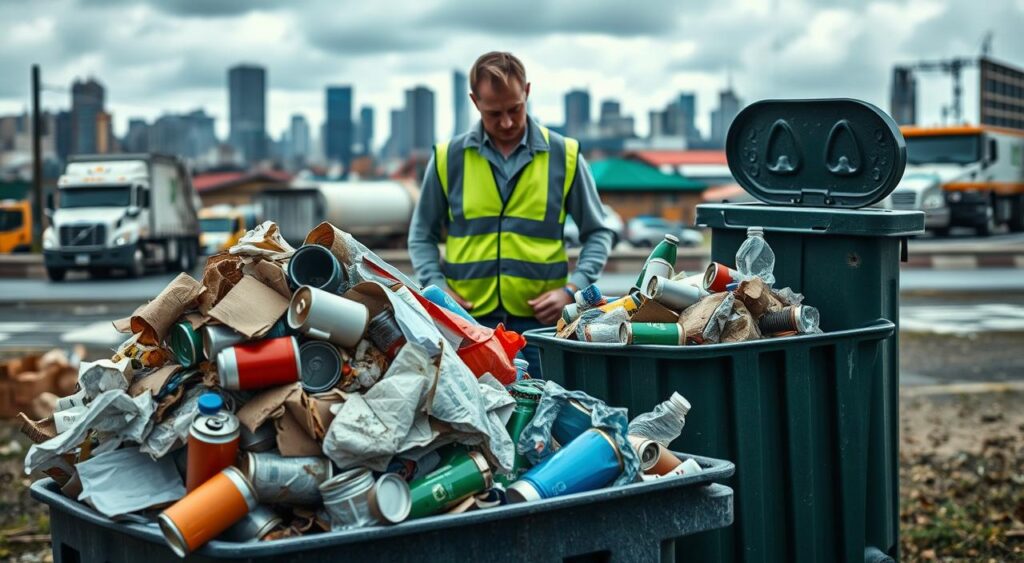
This kind of contamination forces entire lorry loads of good material to be sent to landfill. It wastes resources and money. Local authorities then face higher costs and reduced efficiency in their operations.
Every household plays a crucial role. Understanding what goes in which bin protects the value of our collected materials. It ensures our efforts support a truly circular economy and a healthier environment.
Key Takeaways
- Placing incorrect items in your kerbside collection bin can spoil entire loads of good material.
- Contamination leads to significant financial losses for local councils, diverting funds from other services.
- Dirty or non-recyclable objects cause valuable resources to be sent to landfill instead of being reprocessed.
- Public awareness and correct sorting at home are essential for an effective national system.
- Simple mistakes in one bin can have costly consequences for waste management infrastructure.
- Collective action is needed to improve the quality and sustainability of our material streams.
Understanding Contamination Recycling in the UK
Data reveals a startling truth: the majority of homes are inadvertently sabotaging the very process designed to conserve resources. WRAP reports that 84% of households place at least one wrong item into their bins. This mistake, known as contamination, creates a dual problem of financial drain and environmental harm.
Definition and Impact of Contamination
Contamination occurs when non-target materials enter the stream. This includes food residue left in containers or objects that belong in general waste. A single dirty bottle can spoil a whole batch of paper or cardboard during processing.
| Common Contaminant | Its Effect | The Result |
|---|---|---|
| Food Waste in Containers | Liquids and residue soil paper fibres. | Entire bales become unusable and are landfilled. |
| Dirty Bottles & Pots | Mould and bacteria spread to clean material. | Good glass or plastic is rejected by reprocessors. |
| Cardboard with Plastic Film | Different materials cannot be separated easily. | Paper mills cannot process the mixed stream. |
Financial and Environmental Costs
The extra handling required has a clear price tag. For example, Redcar and Cleveland council pays an extra £100 per tonne to deal with spoiled loads. These added costs impact local services and council tax bills.
Environmentally, valuable resources are lost forever. Material that could have been made into new products is instead buried.
Why Clean Recycling Matters
The solution is straightforward. Ensuring items are clean, dry, and correct before they go into your kerbside collection protects their value. Clear information from your local authority is the first step. This simple practice saves money and conserves raw materials for everyone.
Identifying Key Contaminants and Their Sources
The journey of our discarded materials is often derailed by a handful of common culprits found in every home. Knowing what these problematic items are is the first step to protecting the value of our household waste.
Food Waste and Residue Issues
Leftover food is a major spoiler. Grease on pizza boxes or yoghurt pots ruins paper fibres. Sauce in jars and drink bottles can soak into cardboard. This makes entire bales unfit for processing.
Simply rinsing your containers removes this threat. A quick clean keeps paper and cardboard dry and valuable.
Household Items and Hazardous Materials
Many everyday objects cause havoc. Facilities in Leicestershire pull out up to 4,000 nappies daily. This is a serious hygiene hazard for staff.
Batteries and vapes are dangerous in the sorting facility. They can cause fires. Some councils, like North West Leicestershire, now collect these separately. Always check your local council website for your specific kerbside collection rules.
Small things like toothpaste tubes and plastic lids are also frequent offenders.
| Contaminant | Typical Source | Consequence |
|---|---|---|
| Food Residue | Unwashed pots, jars, and bottles | Spoils paper and cardboard bales |
| Absorbent Hygiene Products | Nappies in the recycling bin | Hygiene risk; entire loads rejected |
| Hazardous Items | Batteries, electronics, vapes | Fire risk at the material facility |
| Small Mixed Plastics | Lids, tubes, and film | Jams machinery and mixes streams |
Taking a moment to sort correctly at home prevents these issues. It ensures your efforts count.
Preventing Recycling Contamination UK
Ensuring your discards are processed correctly hinges on two key practices: cleaning and sorting. By mastering these at home, you directly support the entire system.
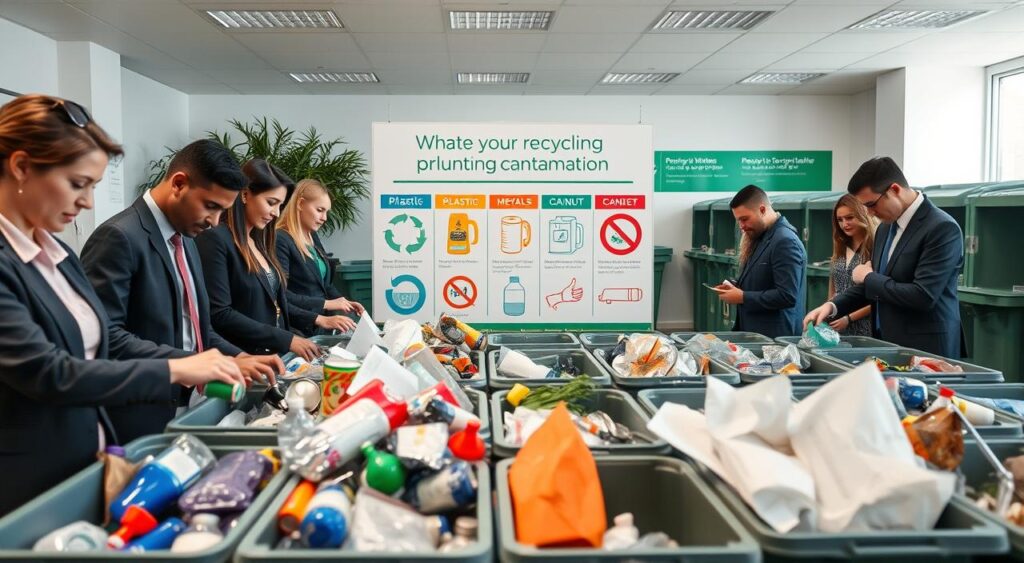
Essential Cleaning Techniques: Rinse and Dry
Leftover food waste is the main spoiler. A quick rinse removes sauce, grease, and drink residue from pots and bottles.
This simple step stops mould and stops liquids from ruining other material. Letting containers air dry is just as vital.
Moisture damages paper and cardboard bales. Dry items keep their value for reprocessing.
Proper Sorting of Containers and Materials
Correct separation is crucial. Always check your local council website for specific rules, as they vary.
For example, Blaby District Council now collects specific household batteries at the kerbside. This kind of updated information prevents hazards.
Common sorting rules include:
- Remove lids from bottles and jars. This helps machinery sort different plastics and metals.
- Keep food drink containers separate from general waste in your recycling bin.
- Flatten boxes to save space in your bins.
Taking a moment to sort things properly at home protects the quality of the material stream. It reduces overall waste and helps your council operate efficiently.
Practical How-To Tips for Correct Waste Sorting
Effective material recovery begins not at the facility, but in your kitchen with a straightforward sorting process. Simple routines ensure your discards are handled correctly.
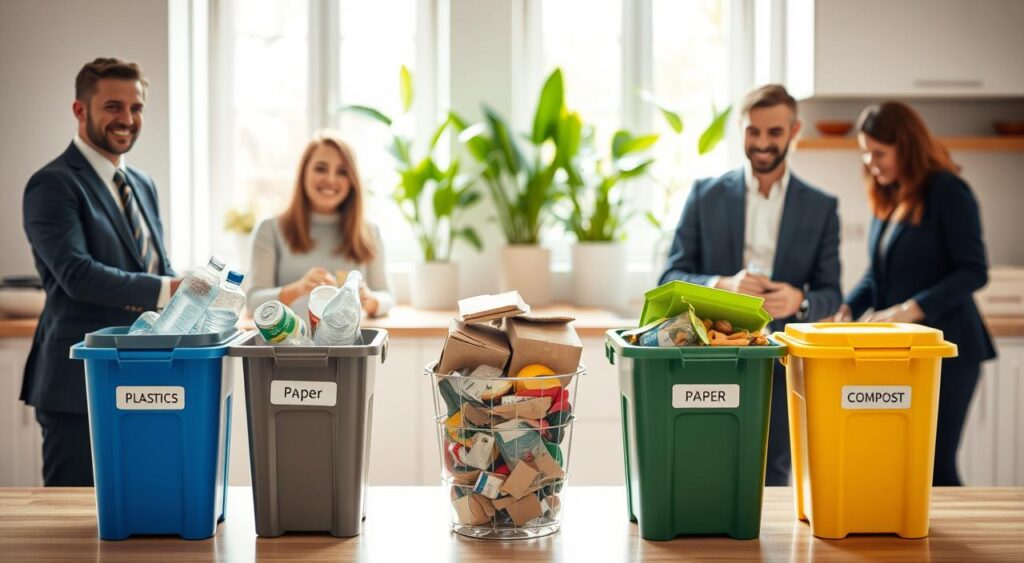
Step-by-Step Sorting Process
Empty all food drink containers. A quick rinse removes any lingering food residue. This protects paper and cardboard from spoilage.
Check your local council website for rules. Melton Borough Council now includes small electrical items in its kerbside collection.
Pay attention to things like toothpaste tubes. Make sure they are clean before disposal.
Flatten boxes to save space in your bins.
Labeling and Segregating Waste Effectively
Label your bins at home. This helps everyone know which items belong in the recycling bin versus general waste.
Keep glass separate from paper. Proper segregation is a vital part of the process.
Remove lids from bottles. This aids sorting of different plastics.
Correct sorting saves time and supports material recovery.
The Impact of Food Waste on Recycling Efficiency
One third of the material entering some processing plants is compromised by a single, avoidable factor. Research from Recorra shows that 30% of the mixed stream at their facility consists of or is spoiled by organic matter.
This presents a major operational problem. New Simpler Recycling rules now require businesses to set up separate food collections from 31st March.
How Food Residue Spoils Recyclables
Leftover grease, sauce, or liquids ruin other materials. They soak into paper and cardboard fibres during collection and transport.
This makes entire bales unusable for reprocessing. Mould and bacteria can also spread, creating a hygiene hazard at the material facility.
Cost Implications and Resource Loss
Processing this spoiled stream increases operational costs significantly. The market value of the recovered material is also lower.
Valuable resources are lost forever. This is a particular tragedy when an estimated 7.2 million people live in food-insecure households.
Better management of this resource is essential.
Real-Life Examples from Councils and Facilities
The new legislation directly addresses this issue. It mandates separate food collections for businesses, keeping organic waste out of other bins.
For households, the principle is the same. Keeping food separate protects the quality of paper, cardboard, and other items.
This simple action saves money on collections and improves the overall system.
Conclusion
Our collective ability to turn used materials into new products depends entirely on the quality of what we set out for collection. Ensuring these items are clean and correct is a shared duty for every home.
The single most important step is keeping food waste out of your bin. This protects valuable resources like paper and cardboard from spoilage. Your simple action makes a massive difference to the entire recycling process.
Always get the right information for your local kerbside collections. A quick check of your council’s rules ensures your household follows the correct procedure for food and other materials.
Thank you for taking the time to learn. Your informed efforts help reduce overall waste and support a more sustainable future for everyone.