A modern landfill is far more than a simple hole in the ground. It is a carefully engineered site designed for the final disposal of residual waste. These facilities play a crucial role in our national infrastructure, handling material that cannot currently be recycled or recovered.
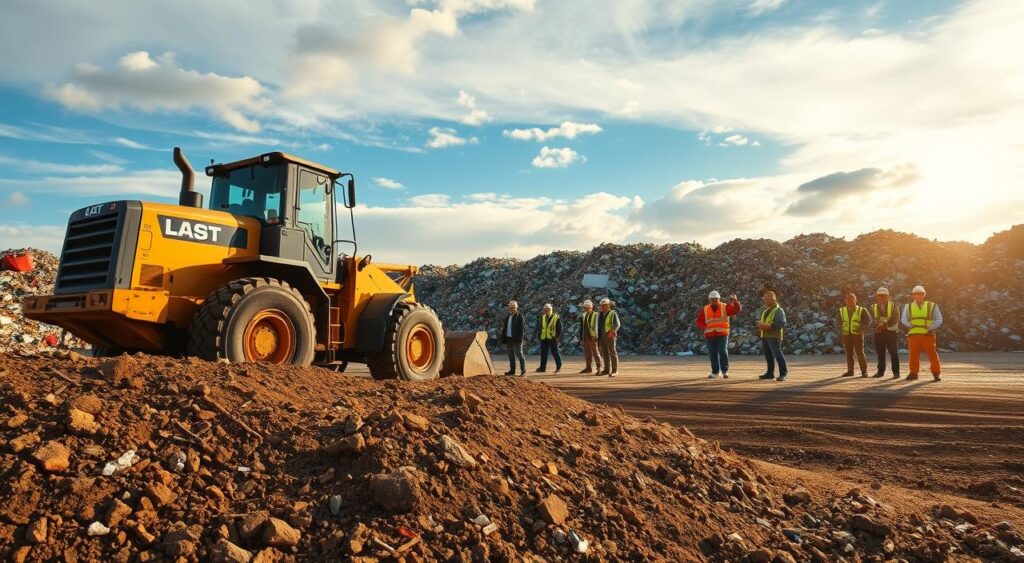
Every year, an estimated 8 million tonnes of rubbish are disposed of at these locations across the country. This makes landfill the second-most used treatment method for our collective waste.
Operations are strictly controlled to safeguard the surrounding environment. The entire waste management process must adhere to rigorous standards set by regulators like the Environment Agency.
This guide will unpack the engineering and regulatory complexities behind today’s landfill process in the UK. Understanding how these sites function is key for businesses and individuals aiming for responsible disposal.
Key Takeaways
- Landfills are highly engineered facilities, not just dumping grounds.
- Around 8 million tonnes of waste are sent to landfill annually in the UK.
- It remains the nation’s second-most used waste treatment method.
- Strict environmental regulations govern every stage of operation.
- The Environment Agency enforces compliance with national standards.
- Understanding landfill operations helps ensure responsible waste disposal.
Overview of Modern Landfill Operations
Today’s engineered sites for refuse are a world apart from the unregulated dumps of the past. They are complex facilities managed with precision to handle the vast amounts of non-recyclable material society produces.
Historical versus Modern Approaches
In the 1960s, so-called “open tips” were common. These areas lacked any real engineering to protect the surrounding land. Now, sophisticated containment systems are standard.
Globally, about 10,000 tonnes of rubbish are sent to these facilities every single day. In Britain, around 600 active landfill sites operate under rigorous oversight. This ensures the safe disposal of materials.
The core modern principle is isolation. The goal is to completely seal waste away from the natural environment. This prevents pollutants from migrating over a long period of time.
Key Stages from Excavation to Capping
The operational lifecycle of a modern landfill follows a clear sequence. It begins with excavating a large, lined pit known as a cell.
Refuse is then placed into this cell in controlled layers. Heavy machinery compacts it tightly to save space and improve stability.
The final, critical stage is installing a durable, impermeable protective cap. This seal is placed over the filled cell. Effective management demands constant monitoring for gas and liquid emissions long after a site closes.
Key Components of the landfill process UK
Before any rubbish arrives, extensive planning shapes the secure containment of non-recyclable materials. The initial phase focuses on creating a stable, isolated environment for long-term disposal.
Site Preparation and Cell Development
Choosing a location is the first critical step. Engineers seek areas that pose the lowest risk to groundwater and the wider environment. This careful selection minimises potential contamination.
The designated area is then divided into discrete units called cells. This modular approach allows for progressive filling and eventual restoration. Each cell is excavated to a specific depth to ensure a stable base.
The Landfill Directive 1999/31/EC legally defines these facilities. It sets the framework for how refuse must be deposited into the land. Operators keep the active working zone small.
This controls the amount of material exposed to air, reducing odours and litter. Proper groundwork is the foundation of the entire operation. It ensures every tonne is handled in a secure and controlled manner.
Regulatory Framework and British Regulations
The safe operation of waste disposal facilities in Britain is underpinned by a robust legal framework. This system ensures every engineered site adheres to strict national standards for environmental protection.
The Environment Agency is the primary regulator. It provides essential guidance and enforces the law across all permitted sites.
Environment Agency Guidelines
The Agency plays a critical role in overseeing daily operations. It issues permits and detailed guidance that operators must follow to remain compliant.
Regular inspections are conducted to check adherence. This proactive monitoring helps identify potential risk before it becomes a serious hazard.
Landfill Directives and Compliance Requirements
Key requirements are mandated by the Landfill Regulations 2005. These rules implement the European Landfill Directive into British law.
They set definitive standards for site design, waste acceptance, and long-term monitoring. Operators must manage both hazardous and non-hazardous waste with the highest safety levels.
Adherence to these requirements is non-negotiable. The Environment Agency can take enforcement action against any facility failing to meet its obligations.
Engineering and Design of Landfill Sites
The physical design of a modern waste containment facility is a masterclass in geotechnical engineering. Every element focuses on creating a secure, stable environment for the long-term isolation of residual material.
Liners and Containment Systems
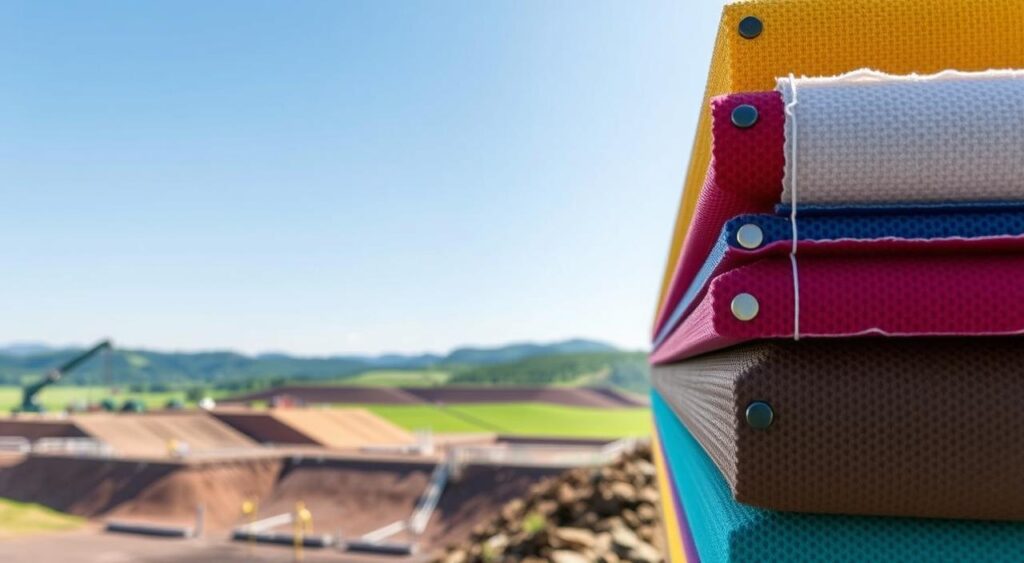
A sophisticated containment system forms the primary barrier. Modern sites typically use a one-metre thick clay liner beneath a two-millimetre welded HDPE membrane.
This composite seal is crucial. It prevents polluted liquid, known as leachate, from migrating into the surrounding ground and water sources.
| Component | Specification | Primary Function |
|---|---|---|
| Compacted Clay Liner | 1 metre thick | Provides a natural, low-permeability barrier to slow seepage. |
| HDPE Geomembrane | 2mm thick, welded seams | Acts as a flexible, impermeable synthetic cap to contain leachate. |
| Composite System | Clay + HDPE combined | Creates a highly effective dual-layer seal for maximum environmental protection. |
Cell Design and Compaction Techniques
Within each designated cell, heavy machinery compacts the waste thoroughly. This increases the density of the material significantly.
Effective compaction maximises the available space. It extends the operational life of the entire facility.
The design of every cell must be validated. A site-specific Hydrogeological Risk Assessment ensures the engineering is appropriate for local conditions.
These advanced techniques guarantee integrity. They protect the environment at the lowest level of the operation for decades.
Waste Management and Treatment Procedures
Responsible handling of society’s discarded materials hinges on a fundamental first step: knowing exactly what the waste is. This initial phase of identification dictates the entire downstream handling pathway.
Waste Classification and Characterisation
All incoming materials must first be legally classified. They are designated as either hazardous or non-hazardous. A basic characterisation assessment is a mandatory part of this waste management procedure.
This evaluation carefully documents the waste‘s source, origin, and chemical composition. Knowing the exact type ensures it meets a landfill site’s strict acceptance criteria.
Treatment Methods for Hazardous and Non-Hazardous Waste
Different categories demand distinct approaches. Hazardous wastes often require specific pre-treatment before disposal.
This can stabilise reactive elements or reduce their toxicity. For all wastes, proper sorting and processing aim to minimise the final volume.
This diligent assessment and treatment creates a clear audit trail. It ensures only compatible waste is grouped together for safe, long-term containment.
Managing Gas Emissions and Leachate
Two major by-products demand constant attention at modern disposal facilities: landfill gas and leachate. These substances form naturally as buried material decomposes. Their effective control is non-negotiable for environmental safety.
Gas Control Systems and Methane Recovery
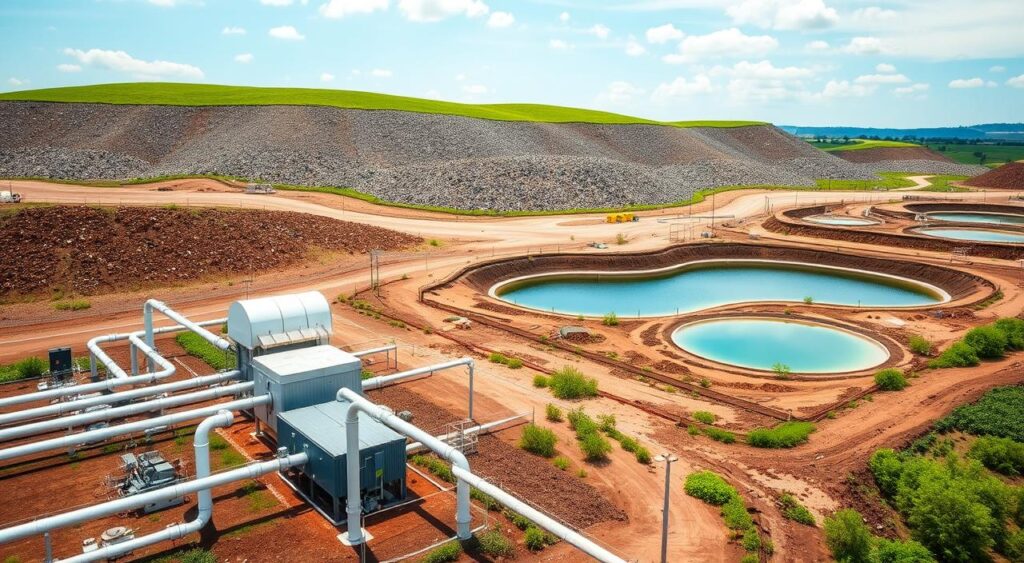
Decomposing rubbish generates a mixture primarily of methane and carbon dioxide. Active extraction systems use a network of vertical wells drilled into the waste mass.
These wells draw gas into a central collection point. This prevents uncontrolled migration into the air. Captured methane can be used to generate electricity, transforming a potent greenhouse gas into a useful resource.
Leachate Collection and Safe Disposal Practices
Leachate is a polluted liquid created when rainwater filters through waste. It can contain high concentrations of contaminants. If released, it poses a serious risk to groundwater.
Dedicated collection systems of pipes and pumps gather this liquid from the base of the site. The leachate is stored in sealed tanks. It is then transported for specialist treatment at licensed water facilities.
| System Component | Primary Function | Key Outcome |
|---|---|---|
| Gas Extraction Wells | Actively draw methane and CO2 from the waste mass. | Prevents atmospheric release and allows for energy recovery. |
| Leachate Collection Pipes | Gather polluted liquid from the base liner. | Stops contamination of surrounding soil and water sources. |
| Perimeter Monitoring Network | Continuously checks for gas or liquid leaks. | Ensures immediate detection and response to protect the local environment. |
Impact on Environment and Local Communities
One of the most pressing issues with waste disposal is the generation of potent greenhouse gases. These facilities can significantly affect both the global climate and nearby residents.
Greenhouse Gas Emissions and Environmental Risks
Methane, a primary gas from decomposing waste, has a global warming potential roughly 80 times greater than carbon dioxide. This makes its control a critical environmental priority.
Beyond gases, poor management can lead to foul odours and attract scavenging animals. These issues directly impact the quality of life for local communities.
Modern engineered sites incorporate systems to reduce these risks. However, regulators must continually assess the long-term impact on soil and water resources.
| Environmental Risk | Potential Consequence | Standard Mitigation Measure |
|---|---|---|
| Greenhouse Gas Emissions | Contributes to climate change | Active gas extraction and flaring or energy recovery |
| Soil & Water Contamination | Pollution of local resources | Composite liner systems and leachate management |
| Nuisance to Communities | Odours, pests, and visual impact | Daily covering of waste and strict operational controls |
Protecting public health is the ultimate goal. Strict operational standards enforced by the Environment Agency aim to minimise negative consequences for both people and the planet.
Evolution of Landfill Practices Throughout the Years
The journey of waste disposal in Britain reveals a dramatic shift from rudimentary dumping to sophisticated containment. This evolution reflects our growing understanding of environmental science and a commitment to better stewardship of the land.
Transition from Open Tips to Engineered Solutions
In earlier decades, the common approach was the ‘dilute and disperse’ method. Old sites, often called open tips, relied on the environment to naturally break down discarded materials.
This method posed significant risks over time. Legislative changes and greater public awareness drove a fundamental rethink. The industry moved towards a philosophy of total isolation.
Modern landfill design is built on the principle of containment. Today’s facilities are engineered to seal waste away from air, water, and soil. This represents a complete reversal from the past.
The progress made ensures these sites are safer and more sustainable. Responsible management of waste now prioritises long-term protection for both people and the planet.
Future Trends and Sustainability in Waste Disposal
The trajectory of waste handling is shifting decisively towards a model where materials are kept in circulation for as long as possible. A core policy driver is the ambitious target that no more than 10% of municipal solid waste should be sent to landfill by 2035. This goal fundamentally reorients the entire disposal sector.
Advancements in Recycling and Recovery
New technologies are revolutionising material recovery. Advanced sorting systems use AI and optical scanners to identify and separate different waste streams with incredible precision.
This allows for a much higher level of pure material to be captured for recycling. The focus on sustainability also means greater scrutiny of the organic content in waste.
Diverting food and garden waste for composting or anaerobic digestion is a key priority. Effective management now prioritises extracting value before any material is considered for final disposal.
| Trend | Key Driver | Expected Outcome |
|---|---|---|
| Advanced Material Recovery | Technological innovation in sorting | Higher quality recyclates and reduced contamination. |
| Organic Content Diversion | Sustainability targets and regulation | Less biodegradable waste sent to landfill sites, cutting methane emissions. |
| Policy-Led Targets | Circular economy principles (e.g., 2035 goal) | A systemic reduction in reliance on traditional landfill for waste management. |
The future lies in a circular economy. Enhanced recycling and material recovery are central to minimising the volume of residual waste requiring permanent storage.
Conclusion
In summary, the management of residual waste through engineered containment represents a critical, albeit transitional, component of our national infrastructure. Modern landfill sites are complex, highly regulated facilities.
Through rigorous engineering and operational standards, they effectively mitigate environmental risk. This high level of control protects our natural surroundings.
The focus is increasingly shifting towards recycling and material recovery. Understanding this way of handling waste is key to appreciating efforts to safeguard the environment.
Ultimately, our way of managing materials today shapes the planet’s health for years. Responsible disposal remains a cornerstone of this content.